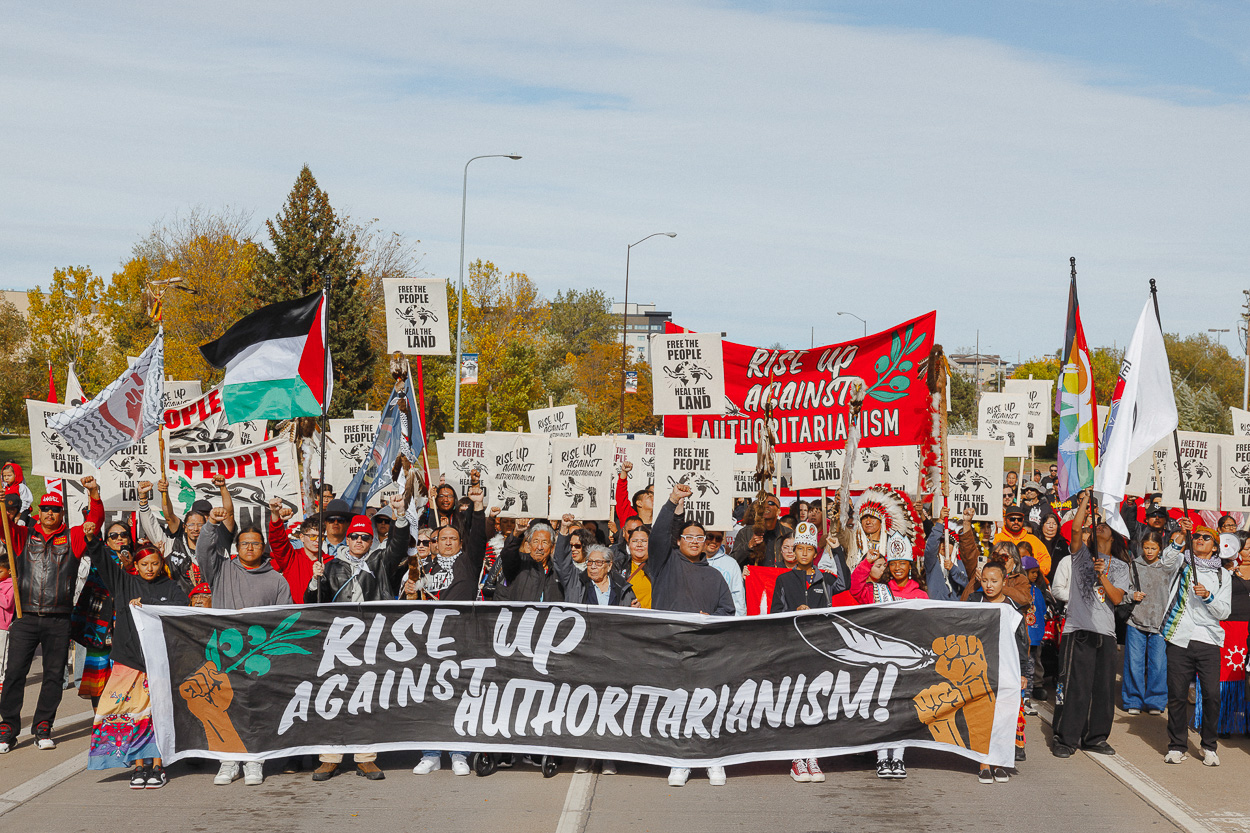

This blog was published in tandem with our Seven Year Impact Report, Free the People, Heal the Land, which shows what seven years of building Indigenous collective power can achieve. While the Impact Report highlights key data and milestones, this blog offers a deeper look into the origin story of NDN Collective and the victories, lessons, and challenges that have shaped our journey thus far.
“To vision futures is to conjure something that is outside of your time and circumstance while being firmly rooted in the moment.” – Prentis Hemphill
For Indigenous Peoples, dreams and visions connect us to our power. Some dreams come as an offering, and others are a creative act, undertaken while fully conscious. We seek spiritual guidance – a visioning process to take us beyond the present moment and beyond perceived limitations, while connecting us to a vibrant future where we live out our most meaningful and liberated lives. At NDN Collective, this is how we dream.
Origins
In 2018, NDN Collective emerged as the result of many interconnected dreams: those of our Ancestors who went from living freely, to facing the most brutal and earliest assaults of colonization; liberation dreams of movement relatives of our past, who boldly challenged systemic oppression and federal Indian policies designed to terminate our rights, steal our lands, and brutalize our spirits and our bodies; and dreams from Standing Rock, where many of us converged in 2016, hungry for justice, for community, and for Indigenous rights to be honored and upheld.
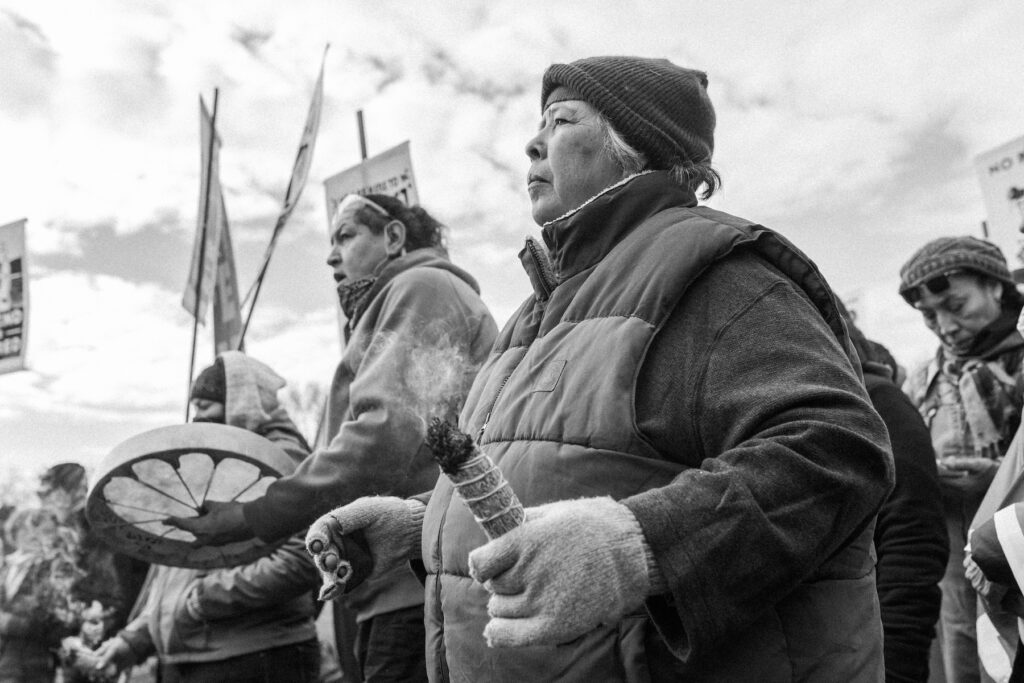
“We are part of that continuous thread,” said Gaby Strong, NDN Collective Vice President. “Our parents, our grandparents, the struggles, the resistance and the work that they did for us, we’ve picked that up, and we’re trying to carry that forward.”
As Indigenous people, we carry a deep ancestral knowledge that we are inextricably connected to our past. We are indebted to the matriarchs, warriors, resisters, and survivors we descend from. We also carry a responsibility to ensure that future generations continue, which requires us to defend and protect the land and lifeways that our Ancestors put their lives on the line for.
The months-long resistance at Standing Rock in 2016 and early 2017 was the once-in-a-lifetime opportunity that so many of us were yearning for, and much like what Indigenous poet and activist John Trudell described during his life of advocating for all of us to take responsibility for the Earth, its people, and our future generations.
Coincidentally, and maybe even prophetically, the camps at Standing Rock were along the Cannonball River— a tributary of the Missouri River, among the trees and on the plains. As thousands converged under the rallying cry that “Water is Life,” this became a pinnacle moment of our generation, where we were finally able to come together like our Ancestors had — for land, life, and the people, and as a fierce collective of committed warriors of all ages and backgrounds.
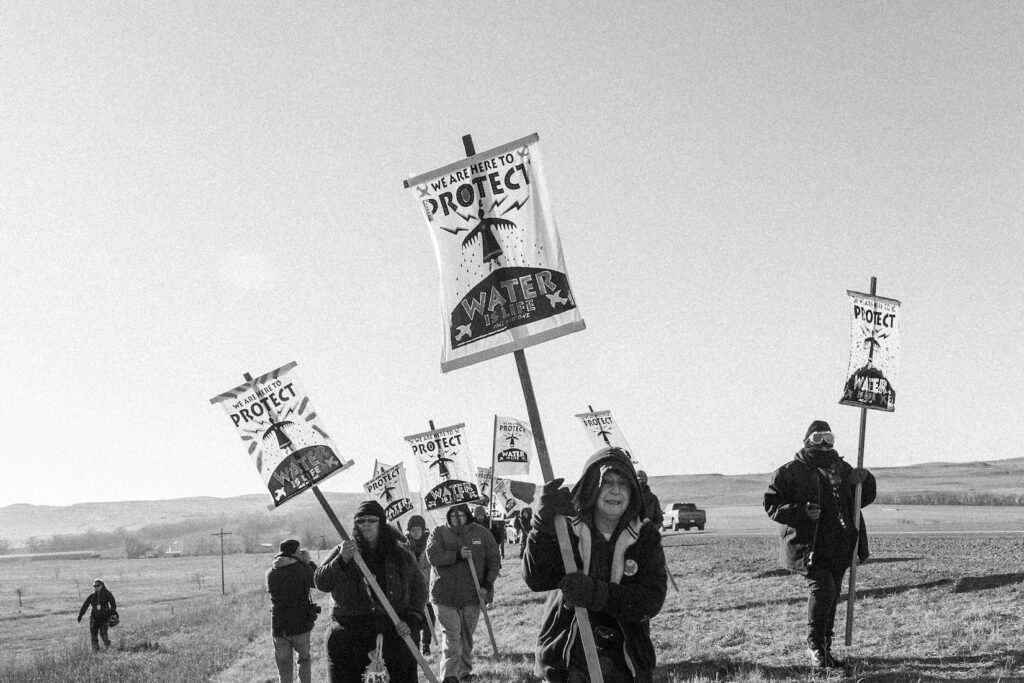
Although many movement elders had already passed before the movement at Standing Rock converged, their spirit of resistance and interconnectedness was ever-present, within every person and every heart and every mind at the camps along the Cannonball River.
We stand on the shoulders of all of our Ancestors. At NDN Collective, this is what we know.
In many ways, the idea of NDN Collective— a bold, unapologetic, and solution-focused movement organization— was catalyzed in Standing Rock, yet seeded much earlier on the Pine Ridge Indian Reservation at the dining room table of NDN Collective’s founder and CEO Nick Tilsen.
Nick, who already had a background in organizing and non-violent direct action, was not just present at Standing Rock in 2016, but deeply intertwined in on-the-ground organizing and frontline actions. Behind the scenes, he was involved in the strategizing and building of infrastructure that supported the daily operations of the camps, as well as the legal and narrative efforts of the Standing Rock Sioux Tribe.
Thunder Valley CDC, founded in 2007, was Nick’s first non-profit endeavor. It was a place-based organization that functioned to create an “ecosystem of opportunity” for the Oglala Lakota people of the Pine Ridge Indian Reservation to prosper.
“I had the honor of helping to build Thunder Valley CDC, serving as its Executive Director for 12 years,” said Nick in an interview in 2018 on the While Indigenous podcast. “That organization came out of a cultural and spiritual movement of connecting young people to culture, spirituality and identity, and then creating a sense of commitment to place.”
The water infrastructure of Thunder Valley CDC was coming from the Mni Wiconi Rural Water Pipeline Project, bringing water from the Missouri River all the way to Pine Ridge. Thus, the fight at Standing Rock to protect the waters of the Missouri River was not just relevant to the work of Thunder Valley CDC but critical to the safety and well-being of the Thunder Valley community.
“While we were building this exemplary model of what just transition looks like away from fossil fuels, the battle [at Standing Rock] was on the horizon,” said Nick. “Thunder Valley stepped up to the plate when we were invited by the Hunkpapa Lakota to come to Standing Rock and support the movement there.”
Thunder Valley CDC played a quiet but important role in the infrastructure of the movement in Standing Rock, utilizing the infrastructure that they had at Thunder Valley to then mobilize and support the battle in Standing Rock.
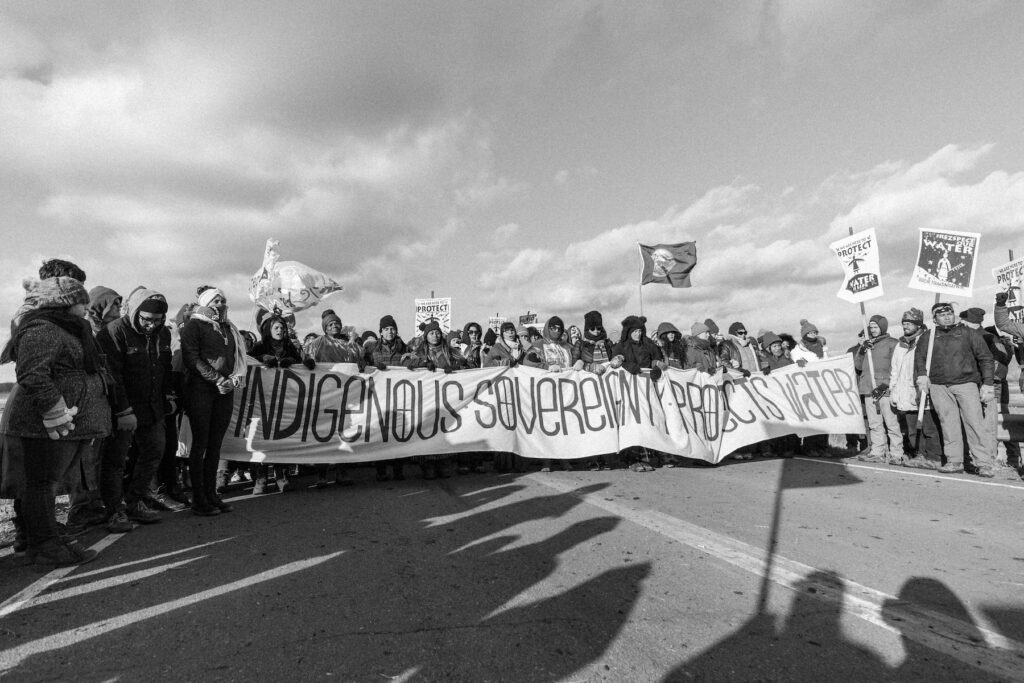
“In that battle, I witnessed the whole environmental movement, the climate movement, and the social justice movement descend on Standing Rock and the Oceti Sakowin,” said Nick. “I watched them bring their resources and their partners to throw down with us, and then I watched so much of that infrastructure and those resources leave the community– the people of Standing Rock, and also the whole Oceti Sakowin.”
“I felt like the battle at Standing Rock would have and could have been won with the right kind of movement infrastructure,” Nick continued. “And that’s where I realized, ‘hey, wait a second’– we have to continue developing sovereign Indigenous Nations at the same time we’re defending against the negative things that are impacting us.”
“Could we build an ecosystem and build movement infrastructure that is set up to support Indigenous people’s self-determination doing both of those things?” Nick wondered. “How could we, in doing the place-based work that we’re doing at Thunder Valley, help dozens, if not hundreds, of other Indigenous communities to begin to roll up their sleeves and begin to invest into their self-determination to build schools, create food systems, reclaim land, and long-term systemic work? And how do we also build the movement infrastructure needed to sustain resistance movements over time against the unsustainable industries that are coming down on our people?”
It was this curiosity and this formative moment that lent itself to the development of something bold, something fresh, and something that took Indigenous movement “dreaming” to new heights— NDN Collective.
NDN’s Launch & a Fresh New Approach
After months of visioning, planning, and building, NDN Collective publicly launched on Indigenous Peoples’ Day in 2018. The launch date was symbolic– a day representing the power of global Indigenous resistance, organizing, and the ongoing fight to reclaim Indigenous narratives after centuries of genocide and erasure.
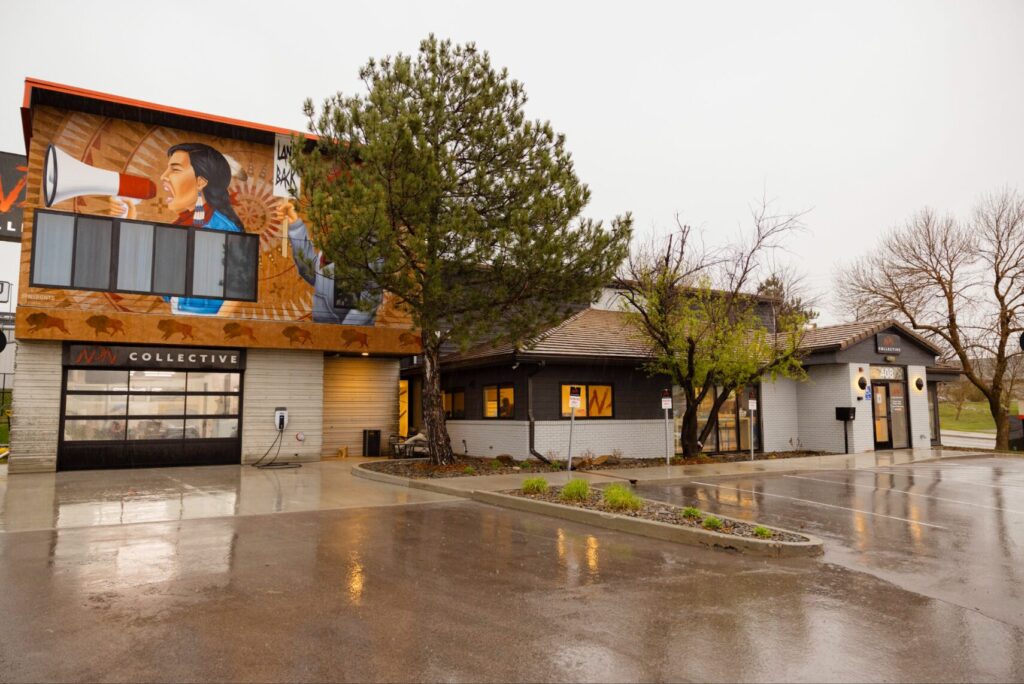
With an all-Indigenous staff of four, a seasoned board of Indigenous directors from across Turtle Island and Hawai’i, and an audacious business plan, NDN Collective came onto the scene with an edgy style and a tenacity that would set it apart from anything yet seen in Indian Country– or anywhere on Turtle Island.
“We’re not asking for permission from the colonial governments to reclaim our power and reclaim our rights,” said NDN Collective Founder and CEO Nick Tilsen. “We are dream-based,” added Gaby Strong, NDN Collective Vice President.
It was this convergence of unapologetic reclamation, power-building, and dreaming that became the spirit of NDN Collective. With a mission to “build the collective power of Indigenous people, communities and Nations, to exercise our inherent right to self-determination while fostering a world built on justice and equity for all people and Mother Earth,” we had our work cut out for us.
From the beginning, NDN had a unique approach. We were unafraid of making bold demands of philanthropy. We unapologetically called out institutions and systemic oppression. We led and built with Indigenous solutions and knowledge.
“Part of our motivation to launch NDN Collective was that Indigenous Peoples have been fighting over less than one-half of 1 percent of philanthropic giving for decades,” said Nick in a 2024 report titled, Meeting the Moment: A Call to Radically Transform Philanthropy for Indigenous Communities.
“Philanthropy has resources that have been derived from the stealing of Indigenous Peoples’ land and the extraction of our resources,” said Nick. “Our approach has been to go get that money, the decision-making power over that money, and put it into the hands of directly impacted Indigenous people.”
When NDN Collective launched in 2018, less than .3% percent of philanthropic dollars in the U.S. were going to Indigenous communities. With Indigenous people making up two percent of the U.S. population, philanthropic funding to Indigenous communities was not even close to parity. Something needed to change, and NDN did not hold back in calling out this disparity while making clear demands for rematriating resources from institutions and wealthy donors back to Indigenous communities.
“So much of U.S. history has been about the stealing of Indigenous lands, stealing of Indigenous children, and the stealing of Indigenous resources,” said Wizipan Little Elk, NDN Collective President. “And our movement and our power as Indigenous people is about taking all of that back.”
Defend. Develop. Decolonize: Year One
Just months after NDN Collective’s launch in October of 2018, we sprang into action with our first lawsuit, suing the State of South Dakota for the Riot Boosting Act, which brazenly sought to chill free speech and suppress protests while paving the way for the Keystone XL pipeline. The effort to suppress the movement at the state level was no surprise, especially after Standing Rock. But NDN Collective was cut from the same movement cloth as Standing Rock, and as an organization deeply rooted in our mission, and a collective comprised of seasoned social and environmental justice practitioners, the State of South Dakota had a fight on its hands.
“Governor Kristi Noem’s legislation is yet another way to promote Big Oil interests and prevent dissent by making protesters subject to legal action,” said Kim Pate in March of 2019 after the lawsuit was filed.
Kim Pate is the Managing Director of NDN Fund and an attorney with 25 years of experience in civil rights litigation. “Protests and other forms of dissent are protected speech under the First Amendment of the Constitution,” Kim said. “If we don’t fight this now, what’s next? Silencing all speech to placate and enable corporate interests at all costs? Not on our watch.”
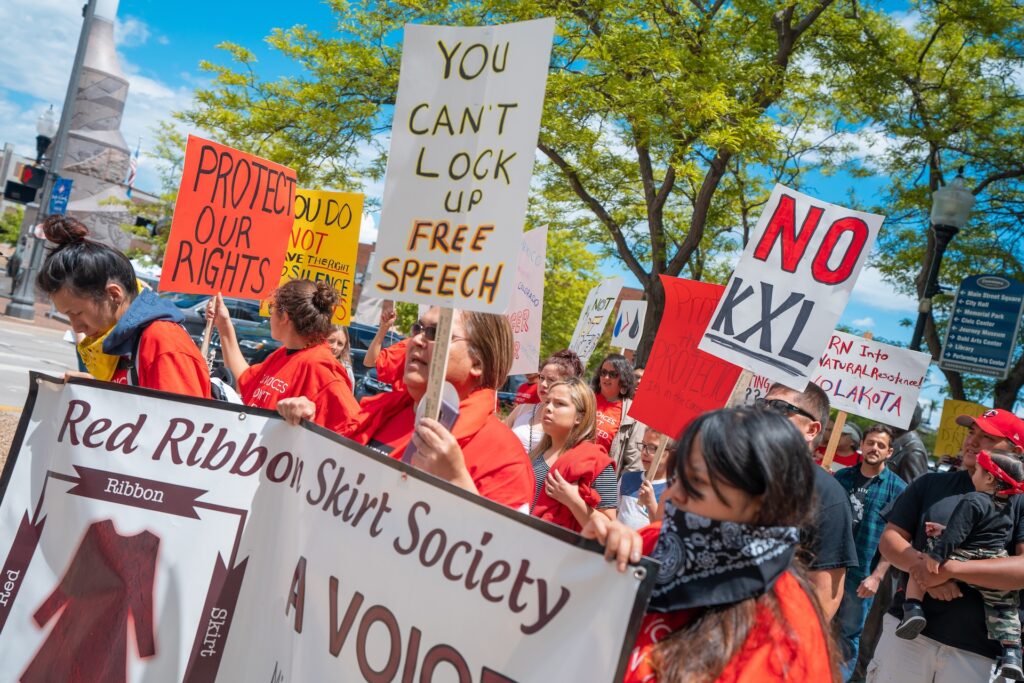
NDN Collective and co-plaintiffs on the lawsuit– the Indigenous Environmental Network, the Sierra Club, and the ACLU– along with individuals on the lawsuit, Nick Tilsen and Dallas Goldtooth, effectively mobilized against the Riot Boosting Act, ultimately succeeding in getting the law nullified by October that year.
This would be the first of many fights that NDN Collective boldly leaned into with the State of South Dakota and then-Governor Kristi Noem. It was also this first legal battle that solidified NDN Collective as a force to be reckoned with and an organization unafraid to stand up and speak truth to power.
In that same time frame, the resistance at Mauna Kea on the island of Hawai’i was reigniting in late 2018 and early 2019, with a growing resistance camp and road blockade at the base of the mauna. Through existing relationships with Kanaka relatives, NDN Collective was invited to support the Indigenous resistance movement to protect Mauna Kea from construction of the Thirty Meter Telescope, joining the effort as a strategic partner to the Hawai’i Unity and Liberation Institute (HULI).
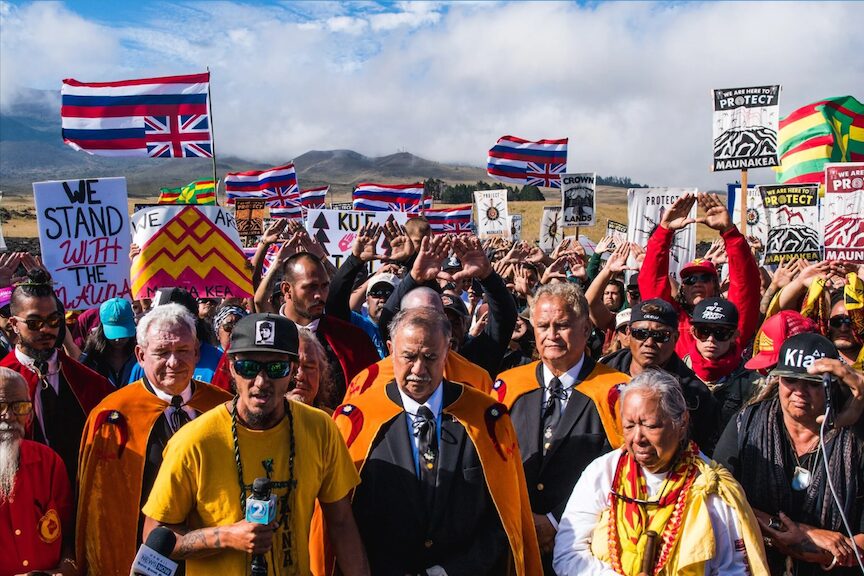
Taking lessons learned from the resistance camps at Standing Rock, NDN Collective showed up with strategic offerings on multiple levels. We provided grants and strategic support to amplify the narrative from Mauna Kea, launched a fundraising campaign, and partnered with Brett Issac and Navajo Power to deploy a team to the camps at the mauna to help build solar trailers on the frontlines of the movement.
“The Native People of Hawai’i have been an inspiration and a shining example in asserting their dedication to their people and culture.” Nick said, “The movement to protect Mauna Kea is a continued extension of that spiritual and cultural foundation that they have built, and we continue to stand with them in their efforts. We believe in the self-determination of the Native people of Hawai’i to determine their destiny and to protect their future.”
By July of 2019, NDN Collective rolled out our first grant opportunity of many with the NDN Changemaker Fellowship. This premier grant combined funding to individuals with a year-long fellowship offered to Indigenous changemakers from throughout Turtle Island– U.S., Canada, and Mexico– and surrounding Island Nations of Guam, American Samoa, and Puerto Rico. In later years, the grant would eventually extend to Indigenous people of the Northern Mariana Islands and the U.S. Virgin Islands.
By investing in Indigenous leadership in 20, and later, 21 distinct regions across Turtle Island and surrounding Island Nations, this fellowship catalyzed Indigenous power-building across a vast geographic landscape. The Changemaker Fellowship supported Indigenous leaders ready to create movements in their own communities as part of building a world that is just and equitable for all people and Mother Earth. Unlike anything like it before, this fellowship crossed colonial borders and connected Indigenous struggles, Indigenous brilliance, and Indigenous solutions – all while building and supporting a network of Indigenous changemakers to support each other in our collective and deeply interconnected movement for liberation.
“We know that within our people lies the power and potential to transform our communities, build beautiful and regenerative Nations, and educate and heal one another,” said Dr. Pennelys Droz of NDN Collective, who drove the development and launch of the program.
Fellows of diverse backgrounds spent the year articulating their visions for the future while cultivating leadership skills and individual wellness plans. They represented unique focus areas, while collectively working to defend Indigenous lands and rights, develop sustainable solutions for the future, and reclaim Indigenous cultural practices, lands, and lifeways through decolonization.
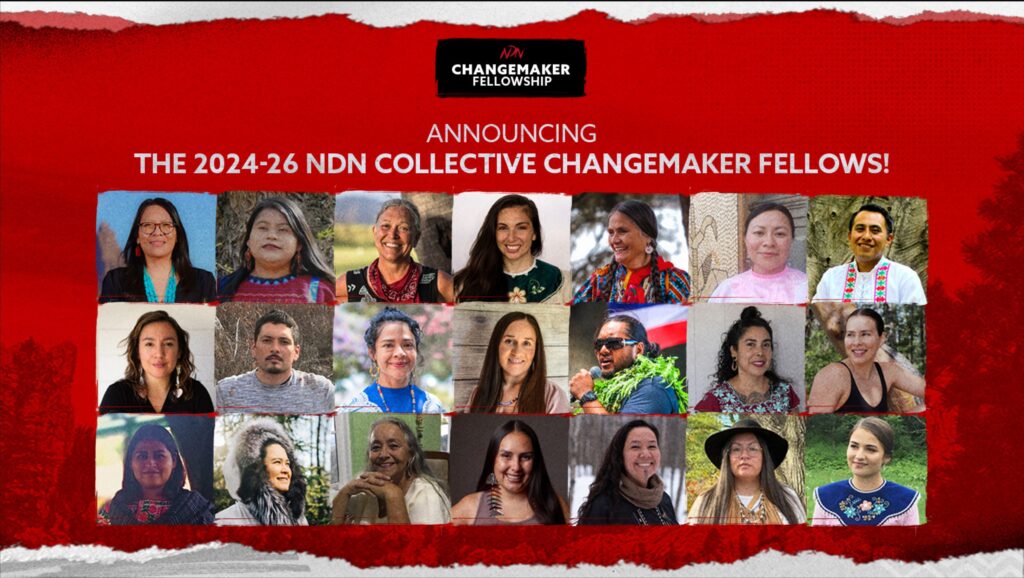
In its first year, the NDN Changemaker Fellowship received over 700 applications, indicating not just a resonance with NDN Collective’s charge to “Defend, Develop, and Decolonize,” but a broader Indigenous movement comprised of both aspiring and seasoned Indigenous changemakers who were ready to take bold action while dreaming and organizing forward.
Overall, NDN Collective’s first year was just as bold, just as expansive, and just as unapologetic as our mission. Other accomplishments from our first year, which are no less significant, included strategizing to defend the land in Canada against the Alberta Tar Sands while partnering with Indigenous Climate Action and the Indigenous Environmental Network, supporting the launch of the South Dakota Education Equity Coalition, marching for Climate Justice in Rapid City with Greta Thunberg as a special guest, the development of the NDN Fund, and growing a multimedia storytelling platform for organizing and amplifying the movement – which included the While Indigenous podcast, a website and blog, rapidly growing social media platforms, and a YouTube channel.
COVID-19 Pandemic & Racial Reckoning: Rising to the Moment (Years 2 & 3)
By early 2020, NDN Collective was ramping up efforts to build Indigenous power with a growing team and new grant opportunities on the horizon. However, with the sudden onslaught of the COVID-19 pandemic, NDN saw the need for a rapid response and tapped into their existing infrastructure to show up for Indian Country– the Tribal communities dispersed throughout the U.S– as well as Indigenous people across Turtle Island impacted by the pandemic.
As Tribal Nations throughout the U.S. struggled to provide services to at-risk populations and mourned the loss of elders and culture bearers in their communities, federal funding couldn’t come fast enough. NDN Collective, on the other hand, was able to mobilize swiftly with the development of the COVID-19 response project for Indigenous people– a $10 million dollar project that was able to disseminate resources to Tribal communities faster than the federal government when our communities needed it most.
“NDN Collective realizes that Native Nations will experience unique impacts and challenges with the COVID-19 crisis, in no small part due to the current reality and history of social, economic and political disenfranchisement of our people,” said Nick Tilsen, NDN Collective Founder and CEO. “While our elected Tribal officials navigate the crisis and lead their respective communities, NDN Collective is doing our part to coordinate resources and offer our assistance during these unprecedented times.”
In just its first month, the COVID-19 response project distributed $2.5 million to Indigenous communities, including 95 Tribal Nations and Indigenous-led organizations in the U.S. and Mexico.
“We are so thankful to NDN Collective for supporting our work, and especially for helping cover costs we didn’t anticipate in our original fundraising,” said Ethel Branch, organizer for the Hopi and Navajo COVID Families Relief Fund and recipient of an NDN Collective COVID-19 Response Project grant. “NDN Collective’s support will ensure we are providing quality food baskets to our elders, immunocompromised and vulnerable families.”
Meantime, in the final year of the Trump administration, the United States faced growing social unrest as a racial reckoning was building right alongside the pandemic. On the heels of the murder of George Floyd in Minneapolis, organizers and activists across the U.S. began tearing down statues of colonial and racist figures– from statues of Confederate leaders to statues of Christopher Columbus.
When Trump announced that he would be visiting Mount Rushmore for a fireworks show in the Black Hills in July of 2020, NDN Collective knew what we had to do.
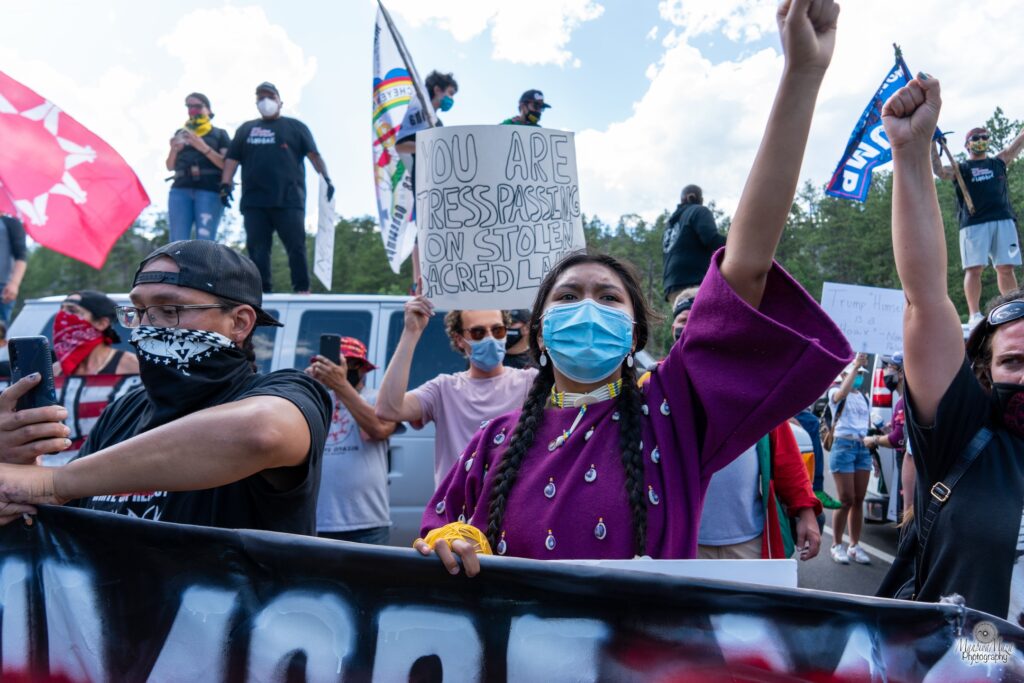
“Mount Rushmore is yet another symbol of white supremacy and colonization, and until it is returned to the Lakota, we will continue to oppose it and fight for justice,” said NDN Collective Founder and CEO Nick Tilsen in a 2020 NDN press statement calling for the closure of Mount Rushmore and the return of the Black Hills to the Lakota.
With nonviolent direct action and civil disobedience being deeply embedded in the DNA of our organization, NDN Collective did more than just oppose Trump’s visit to Mount Rushmore and call out the monument as a symbol of white supremacy— we took action.
On July 3, 2020, NDN Collective coordinated a protest turned road blockade in the Black Hills, just as traffic was making its way to the fireworks show attended by President Donald Trump. In the end, more than a dozen protestors were arrested, including NDN Collective Founder and CEO Nick Tilsen.
“Our people have fought for this land and we will continue to. This won’t be the last,” said Nick before being led off in handcuffs. ”Our goal isn’t just to resist, but to radically imagine a better future.”
Nick would ultimately face a long legal battle in the months ahead, alongside the rest of the land defenders who were arrested. Moreover, the LANDBACK movement and the fight to return the He Sapa– the sacred Black Hills– back to the Lakota, was reignited, broadcast on an international stage. Later that year, NDN Collective launched the LANDBACK campaign, solidifying our commitment to put Indigenous land back into Indigenous hands.
A hallmark of the LANDBACK campaign also included political analysis that highlighted social and economic disparities for Indigenous people that are directly related to the loss of our lands and lifeways. This includes the often devastating effects of intergenerational trauma that can manifest as health issues such as addiction or homelessness due to discrimination or economic challenges. With NDN Collective’s roots and headquarters located in Mni Luzahan, otherwise known as Rapid City, we have always worked to meet the needs of Indigenous Peoples there, including showing up for our unsheltered relatives.
“The settler state of South Dakota, the settlement of Rapid City, and the Rapid City Police Department create the conditions that make it so that our relatives are unsheltered and kept from basic living necessities,” NDN Collective said in a statement with the launch of the LANDBACK campaign. “It is our right and our duty to care for our kin.”
Consequently, Camp Mni Luzahan was also established in late 2020, with NDN Collective staff working alongside the Mni Luzahan Creek Patrol, a Lakota-led group who worked to provide aid to houseless relatives and ultimately prevent deaths in the winter by freezing and exposure to the elements.
“We go out every single night looking for folks, we don’t make anybody come here,” said Mark Tilsen, an NDN Collective organizer. “For folks who want to go to a safe bed or detox, we take them there. If they have relatives that they can stay with, they can go there.”
Offering a compassionate hand, NDN Collective offered services to houseless relatives who were too often vilified by the local city government, which sought to punish and criminalize houseless relatives more than help them. It was NDN Collective’s goal to incubate a community-based solution to support Rapid City’s houseless community. Other services offered to relatives at Camp Mni Luzahan included COVID-19 testing, a kitchen area to prepare meals, and a communal fire area.
Organizing, Seeding & Resourcing a Growing Movement (Years 4 & 5)
Having firmly established ourselves in our first few years as an unapologetic movement organization that walks our talk, NDN Collective moved into the next couple of years with goals that delved even deeper into the substance of our mission. Among those goals and efforts included launching the Community Self-Determination (CSD) Grant, a power-building opportunity for Indigenous communities to vision and exercise their inherent right to self-determination.
“Community self-determination calls on all of us to think creatively and innovatively, to address root causes of our struggles and design solutions that are shaped by and embraced by our own people, our own communities,” said Gaby Strong, NDN Collective Vice President, whose former role as Managing Director of NDN Foundation saw through the development of the CSD grant. “It’s an honor to resource our people in this way. This is just the beginning.”
Carrying forward our commitment to investing in Indigenous-led solutions, the Community Self-Determination (CSD) grant offered support to Indigenous-led organizations, businesses, and Tribes. In its first year, the grant awarded 65 recipients with grants of $100,000, distributed over two years.
“This cohort of grantee partners represents some of the most impactful work happening across Turtle Island—defending the air, land and water; developing Indigenous economies based on regenerative principles; and revitalizing our languages, cultures and ceremonies in ways that illuminate the path for the next generations,” said Tina Kuckkahn (Ojibwe), former Director of Grantmaking for NDN Collective.
In the following years, 2023 and 2024, NDN Collective awarded an additional 108 grantees the Community Self-Determination grant.
Taking our mission in yet another direction of visioning for the future, NDN Collective looked toward developing opportunities for our youngest and most precious generations.
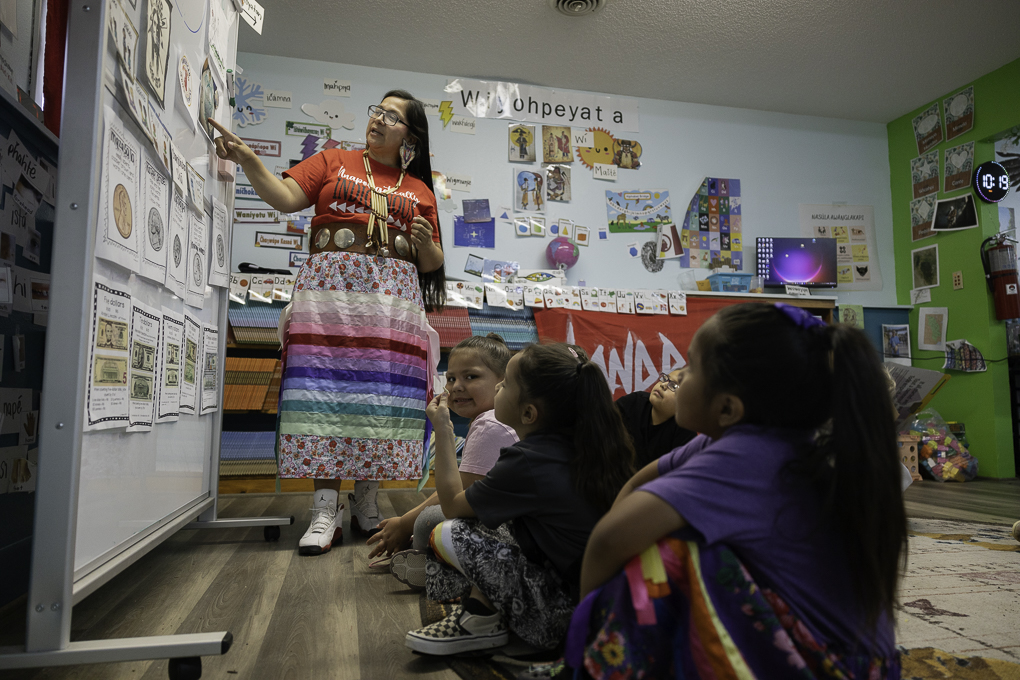
On September 7, 2022, NDN Collective opened the Oceti Sakowin Community Academy (OSCA), the first Indigenous-led school designed specifically for students in the Mni Luzahan (Rapid City) area. The school aims to close the opportunity gap between Indigenous and non-Indigenous students that had gone unaddressed for decades. Indigenous students in South Dakota are among the lowest in terms of graduation, achievement, and mobility rates, and are disproportionately and more harshly disciplined in schools than their non-Indigenous peers.
Starting with one kindergarten class of 40 in 2022, OSCA would grow each year by adding a new kindergarten class while the former class progressed to first grade, and so on. The school’s curriculum connects Indigenous youth to their cultures, languages, ancestral knowledge, history, and traditional ways of life– critical culture-based educational components which are not currently available to urban Indigenous Rapid City students.
Even as NDN Collective and community partners were setting the foundation for culturally safe spaces for Indigenous students, we still faced the harsh reality of racism in the heart of the Black Hills, where we are headquartered.
On March 23 2022, NDN Collective announced the filing of a federal civil rights class action lawsuit against the Grand Gateway Hotel for its racist and discriminatory treatment of Native people. This was in response to a charged statement on social media from a Rapid City hotel and business owner who threatened to ban all Native Americans from the Grand Gateway Hotel and Cheers Lounge.
The lawsuit was also accompanied by organized marches and boycotts to demonstrate that Rapid City would not tolerate racism against Native people, serving as a call to action for the entire community. “We will not tolerate racist policies and practices like those demonstrated by the Grand Gateway Hotel. Our communities are struggling, and our young people are up against so many challenges and obstacles,” stated Nick Tilsen, NDN Collective Founder and CEO. He continued, “We invite all Black, Indigenous, People of Color, and White Allies to march with us as we demand action.”
As NDN Collective organized against systemic racism in Rapid City, we also continued to train Indigenous organizers from across Turtle Island to have the skills to take action against injustices in their own communities. This is why we hosted our first He Sapa Action Camp in the spring of 2023.
Over 150 people representing more than 60 Tribal Nations and territories came together in the He Sapa for this training. The He Sapa holds deep significance for many tribal nations, making this the perfect space and backdrop of NDN Collective’s action camp. “This territory is unceded territory of the Lakota people, and while we’re in this time of the LANDBACK movement, the Black Hills plays an important role in that movement,” shared Nick.
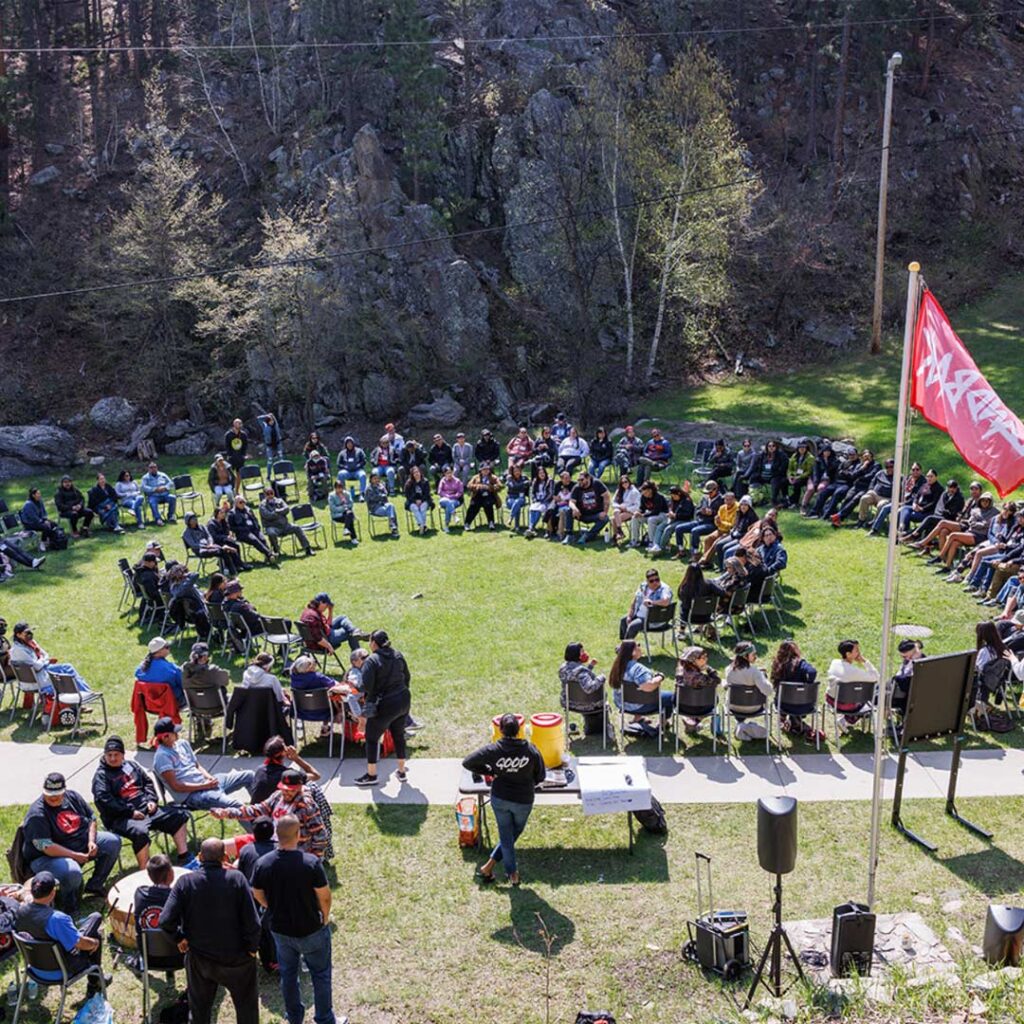
The camp served as an opportunity to both exchange skills and strategies across different non-violent direct action tactics and build relationships among Indigenous organizers and across generations. Korina Barry, Managing Director of NDN Action, was among those who organized the ȞeSápa Action Camp and heard about participants putting their skills to use not long after the camp. “Since camp has ended, we’ve already seen the activation and utilization of newly learned and refined skills within organizing on the frontlines. This is what it is all about,” Korina said.
Organizing During Rising Authoritarianism (Years 6 & 7)
After five initial years of intentional investing in Indigenous self-determination, we saw community-based organizations that received initial funding from us truly stabilize. This told us that it was time to shift our focus from proof of concept to strengthening our movement infrastructure.
Even with 2024 being an election year, we knew that we had to continue to develop Indigenous-led solutions regardless of the outcome. We urged our community to vote like a radical and honor the complexities of participating in a system that was always built to erase us. Voting is one tactic of many that we use to minimize harm against our people and our land while building the collective power of Indigenous movements and futures.
One Indigenous-led solution NDN Collective doubled down on during this time was our investment in the Rapid City community. We purchased 65 acres of land on the north side of Rapid City, where we will build a permanent home for the Oceti Sakowin Community Academy. The plan for the remaining land is to build affordable housing options and partner with organizations like He Sapa Otipi to create a community hub for Native people.
We also partnered with the Bush Foundation to create the Collective Abundance Fund. Launched in 2023, this fund supports the rebuilding of generational wealth while addressing the racial wealth gap among Native individuals in South Dakota, North Dakota, and Minnesota. “We are excited to provide this opportunity to our people – for families to begin to realize their hopes and dreams and rebuild a collective future that reflects a redefinition of wealth as defined by Indigenous people,” said Terri Peterson, Program Manager of the Collective Abundance Fund
Since the start of the Collective Abundance Fund, we have awarded over 15.6 million dollars to 396 individuals. These awards have had life-changing impacts, including allowing people to start businesses, pay for degrees, or be the first in their family to own a home. In the first year alone, over 170 jobs and contracts were created, and awardees purchased a total of 1,065 acres of land.
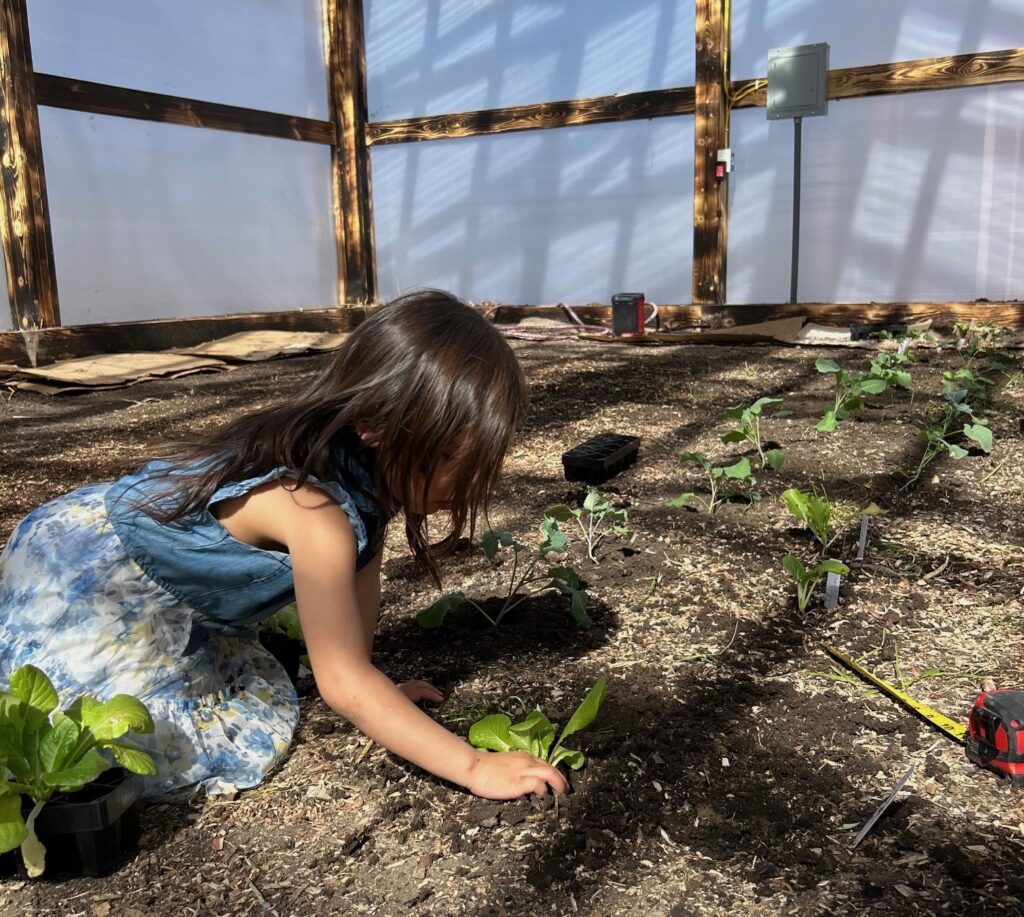
While we were investing in Indigenous self-determination, NDN Collective continued on-the-ground organizing at both a local and national level to heal our land and free our people. These organizing efforts took place alongside numerous allies and were guided by our elders and ancestors who came before us. Guided by this strength, we united to deliver generational organizing wins.
Our place-based organizing work centers on He Sapa, the heart of everything that is. In 2023, one in every five acres in the He Sapa was under a mining claim. But there is also a long history of fighting against mining ever since the early “discovery” of gold and minerals led to a mining boom in the late 1800s.
In 2024, after years of organizing and advocacy work by NDN Collective and other allies, then-Secretary of the Interior Deb Haaland (Laguna Pueblo) signed and approved the Pactola Mineral Withdrawal. This withdrawal protected 20,000 acres of land in the Black Hills against mining for the next 20 years. “We stand firmly rooted in the more than 150-year struggle of our respective Nations for the honoring of Oceti Sakowin treaty rights and of resistance against extractive industries poisoning our sacred lands and waters,” shared Taylor Gunhammer, NDN Collective organizer and leader for Protect The Hesapa campaign.
This victory is the result of years of advocacy and community organizing alongside tribes, local officials, and the US Forest Service. With support from community members and tribal partners, NDN Collective organizers gathered over 1,900 public comments supporting the mineral withdrawal submitted before the deadline. This was not only a huge win for the campaign, but also for the He Sapa and future generations.
These years also brought another organizing victory that Native people have been working towards for decades, and that was freeing wrongfully incarcerated Indigenous political prisoner Leonard Peltier.
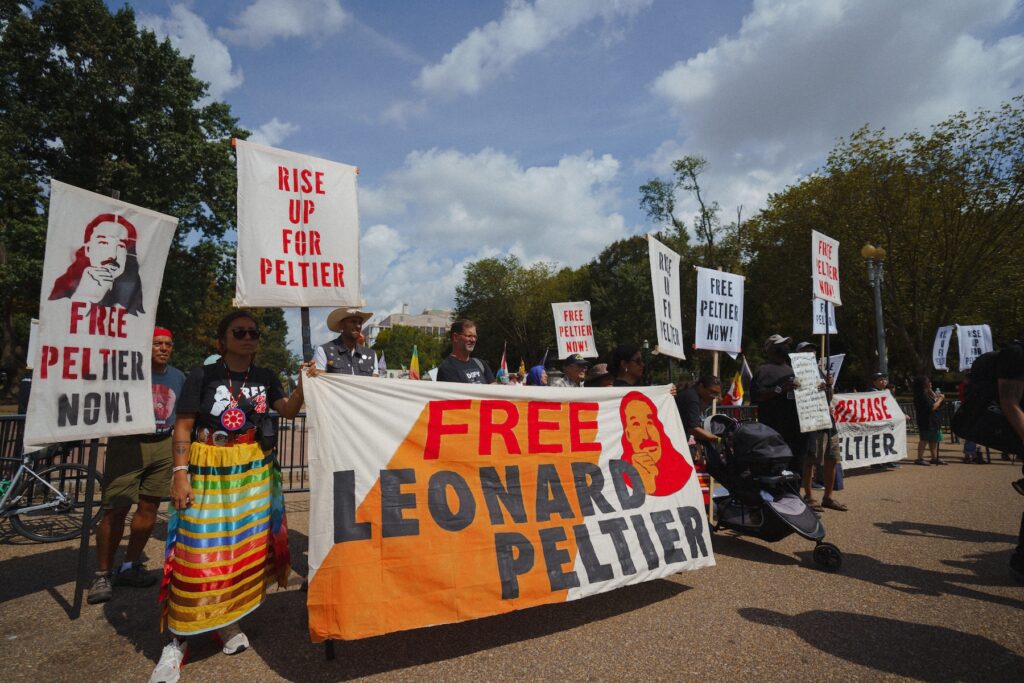
Many of us grew up knowing Leonard’s story and the injustice of his case. So in 2022, we set out a clear intention to work directly with Leonard himself and follow his lead for organizing our work. “We prayed, organized, advocated, and never gave up. We were accountable to Leonard directly the entire time,” Nick shared, “We strategized with him and fought alongside him to achieve this historic victory.”
Our strategies included speaking with public representatives, coordinating with tribal leaders, meetings with federal officials, and implementing a comprehensive media strategy. In 2023, on Leonard’s 79th birthday, NDN organized a caravan in partnership with Amnesty International from Rapid City, SD, to Washington, DC, which culminated in an action where hundreds gathered in front of the White House to demand that President Joe Biden grant Leonard Peltier executive clemency.
This direct action resulted in the arrests of 35 Indigenous people and allies, including the president of the National Congress of American Indians, Fawn Sharp; the executive director of Amnesty International USA, Paul O’Brien; and the founder and CEO of NDN Collective, Nick Tilsen.
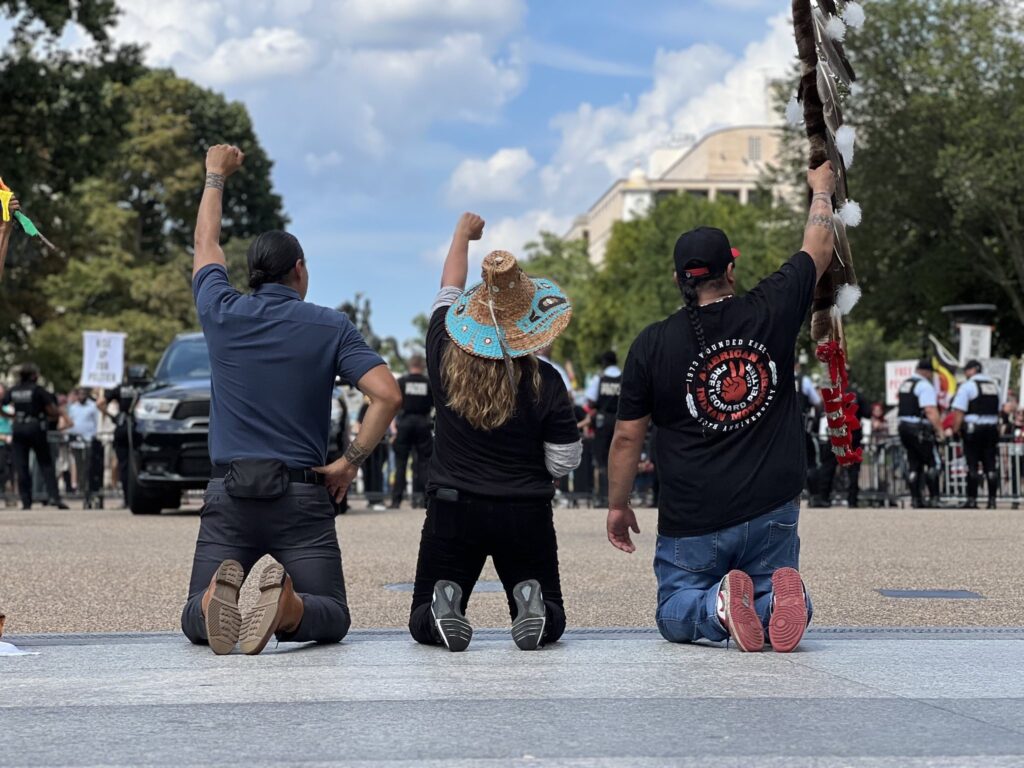
Our advocacy and organizing to free Leonard Peltier continued into 2024 with rallies, vigils, letters of support, and more meetings with elected representatives. We weren’t going to stop until Leonard came home.
Then, on his final day in office, President Joe Biden commuted Leonard’s sentence and granted him executive clemency. “Leonard Peltier’s liberation is our liberation,” shared Tilsen after the news broke, “and while home confinement is not complete freedom, we will honor him by bringing him back to his homelands to live out the rest of his days surrounded by loved ones, healing, and reconnecting with his land and culture.”
NDN mobilized our team to develop and implement a plan to safely bring Leonard back home after his release to Turtle Mountain, where a fully furnished house purchased by NDN Collective awaited him. Our staff also coordinated with the Rolette County and Turtle Mountain Tribal services, identifying eligibility for elder programs and in-home support. “I am grateful for NDN Collective,” Leonard Peltier shared with us. “They led executive clemency efforts to free me and brought me home after 49 years in prison. They bought and prepared a home for me. They made sure I had what I needed, provided security and transportation from the minute I stepped out of prison to when I walked into my house on Turtle Mountain. They helped me transition back among my people and treated me with dignity and respect.”
Staying Grounded in Uncertain Times
On the tail of an incredible 7 years of building the collective power of Indigenous people, getting LANDBACK and freeing Leonard Peltier, we faced our largest challenge as an organization yet – combating democratic backsliding while continuing to work towards our mission. Like many other organizations, our communities came to us with urgent needs as the government froze funds and shut down services. At the same time, we still had to stay on course for the larger vision of the world we want to build, even as philanthropy came under attack and some funders pulled back on their support for our work.
Our revolutionary work and unapologetic values put NDN Collective in the crosshairs of many who have sought to repress our voice and work since we opened our doors. “So now, the very things that NDN Collective was loved, celebrated, and invested into before, like land back, racial justice, dismantling white supremacy, fighting for equitable, affordable housing in Indigenous communities, renewable energy, all these things that we were fighting for became the very things that made us ‘high risk.’” Nick reflected.
NDN Collective responded with a call to move resources immediately from wealthy individuals and foundations directly to Tribal Nations and Indigenous people, organizations, and communities who are most vulnerable to the Trump administration’s agenda. But this moment of mass destabilization directly impacted our budget and organizational sustainability, and we had to make major strategic shifts within the organization.
Transforming to Meet the Moment
We knew we needed to adapt to the new contexts we are now organizing Indigenous power within, but we also recognized that 2025 was the seventh year since NDN was founded. In many Indigenous communities, we recognize seven as a sacred number often accompanied by a call from our ancestors to pause and reflect. In 2025, we answered that call by transforming our program areas to better meet this moment. NDN Collective, as an organization, is a tool to serve Indigenous communities, so we asked ourselves how can we use what we have developed to create the most effective tool to continue to build the collective power of Indigenous people in this historical moment?
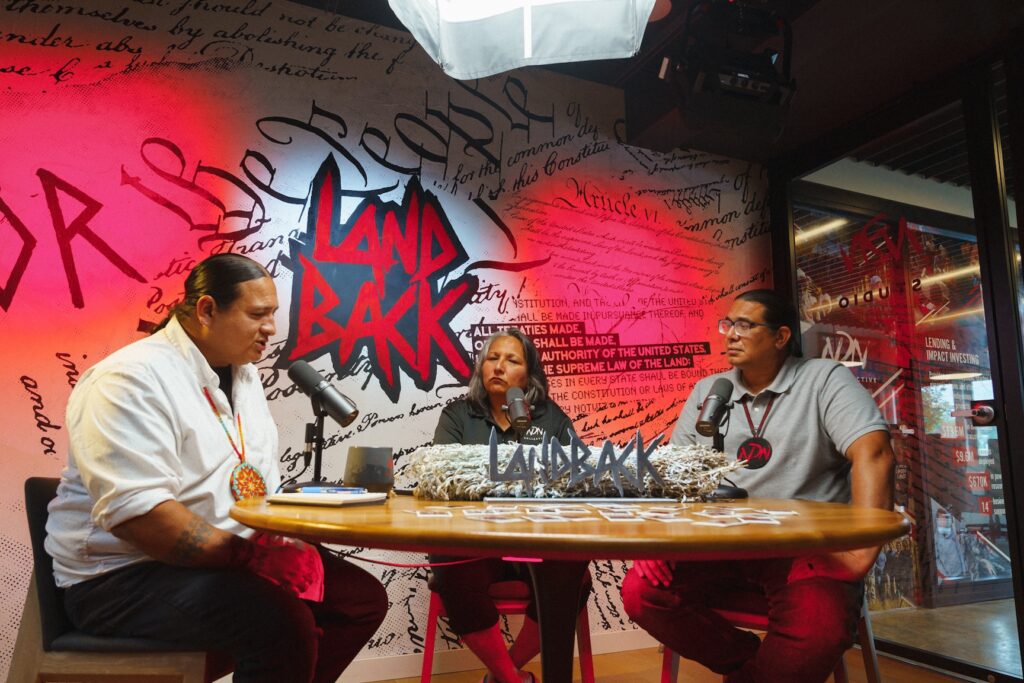
This transformation resulted in NDN Collective doubling down on our organizing roots while also shrinking our staff to match the available resources. “A part of our strategy is we get smaller to get stronger,” shared NDN Collective President Wizipan Little Elk Garriott. But at the same time, these changes were painful as we said goodbye to staff members who felt like relatives. Staff who contributed their brilliance, skills, countless hours, and put themselves at risk for this work, always for the people. In the past seven years, we’ve won incredible victories, supported programs that reached over one million people, and got over 170,000 acres of LANDBACK across Turtle Island, all because of our staff and their unwavering dedication. “We have been able to achieve things that people told us we would never be able to do, and we did it,” reflected Gaby Strong, Vice President of NDN Collective.
But even in this time of changes and challenges, we have worked to stay true to our Indigenous knowledge systems and the spiritual connection that started all of this work. When the need for a transformation became apparent, we gathered and called upon our ancestors in ceremony to help guide us through these difficult decisions to continue our work in a good way. “We have much more to work on,” asserted Gaby, “and I think our work right now is more important than ever.”
We also worked to keep true to our values of taking care of our staff who were able to stay with NDN Collective, knowing that their work would only intensify. “We’re constantly bringing people along, including each other,” shared Nick. “We’ve always done political education pieces and brought people in to help us further our understanding, invest into our own political analysis of what has been happening to us as a people.”
Our approach evolved from a past focus on moving resources at scale to base-building and community organizing for the LANDBACK movement at scale. Our work is now structured into 3 program areas—LANDBACK Action Network to mobilize Indigenous Peoples across Turtle Island and beyond, He Sapa Initiatives to double down on land protection and LANDBACK efforts on the ground in the He Sapa, and Narrative & Storytelling to build Indigenous power through uplifting stories from the LANDBACK movement and disrupting false narratives.
Commitment to a Just Future
Through these difficult times, we remain committed to dreaming Indigenous dreams of a just future for all people and Mother Earth, because we know our dreams hold power. But to do this work, we must be willing to evolve to meet the moment while staying grounded in our core values. We are not the same organization we were when we began 7 years ago, and we know that in 7 years we will look different from how we do now. But no matter how our strategies may shift to meet the moment, we remain committed to our theory of liberation.
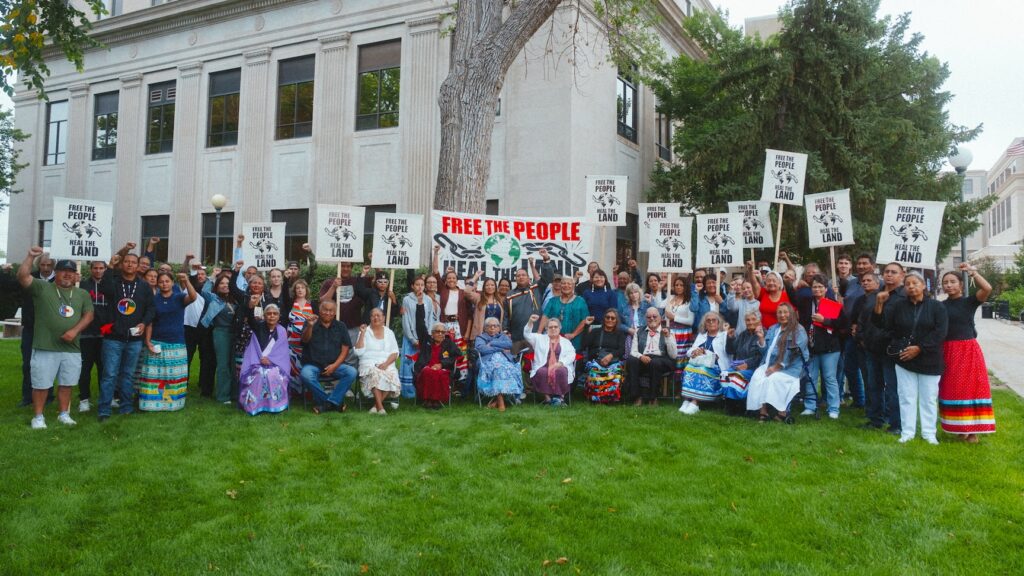
Twenty years ago, the spirits came to Nick while in Inipi (sweat lodge) – How long are you going to let other people decide the future for your children? Are you not warriors? They asked him. NDN Collective’s work always has, and always will, seek to answer that call from our ancestors. “We are all part of that ancestral prayer,” said Gaby, “we often talk about calls to action, and what we are doing at NDN Collective is also putting prayer into action.”
In this work, we refuse to come from a place of fear, but instead continue to stand in our power, in this moment, as Indigenous Peoples. So while we fight to protect all that we hold sacred on our lands and communities, we continue to build, dream, and boldly reclaim all that was taken from us.
###
NDN Collective is an Indigenous-led organization dedicated to building Indigenous power. Through organizing, activism, philanthropy, grantmaking, capacity-building, and narrative change, we are creating sustainable solutions on Indigenous terms.