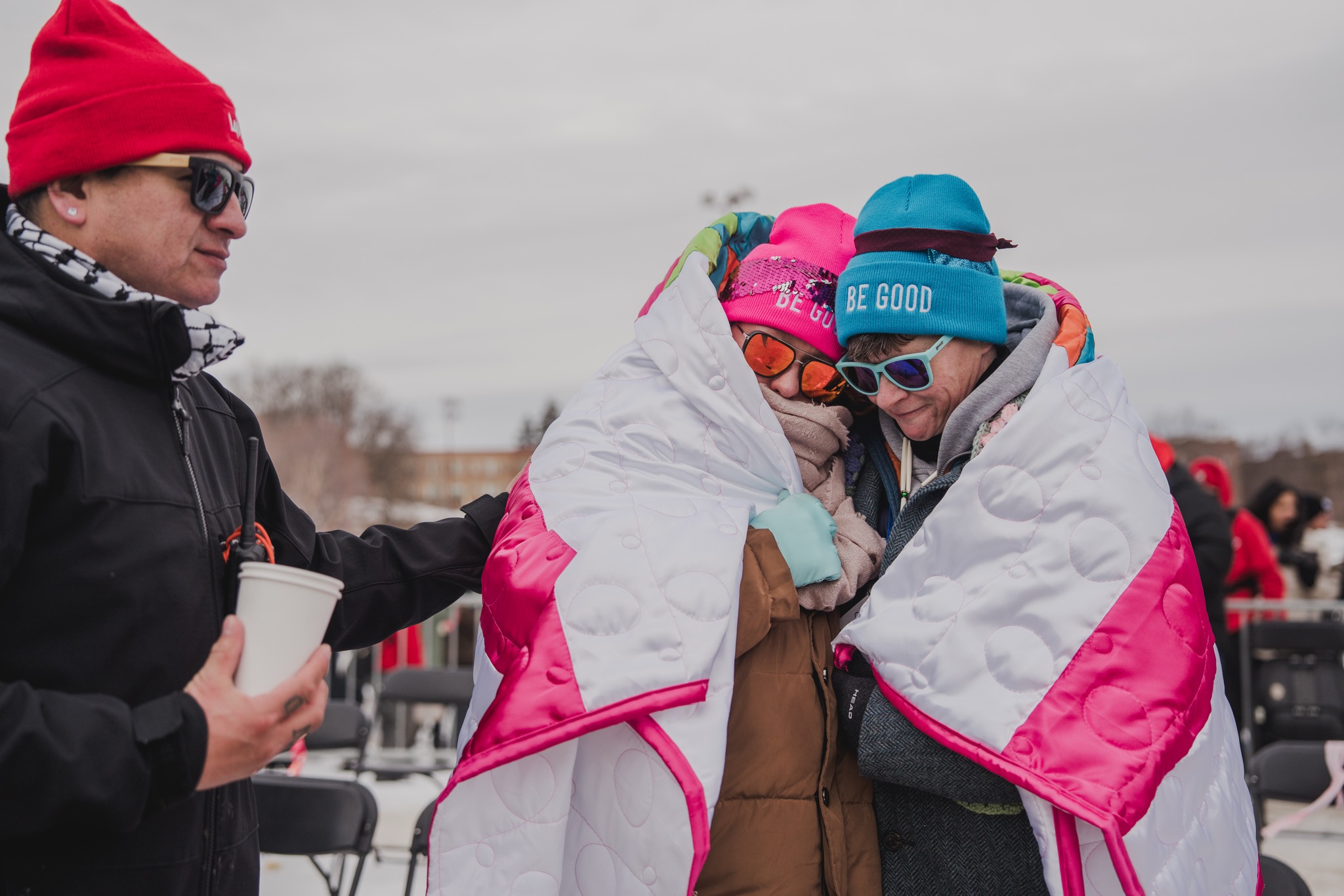

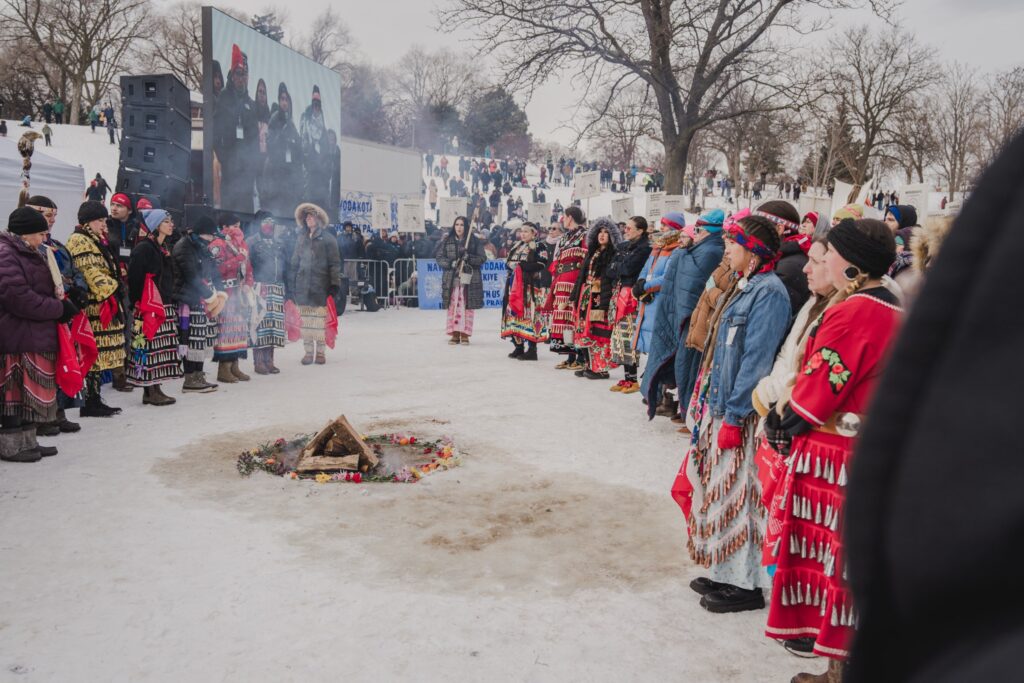
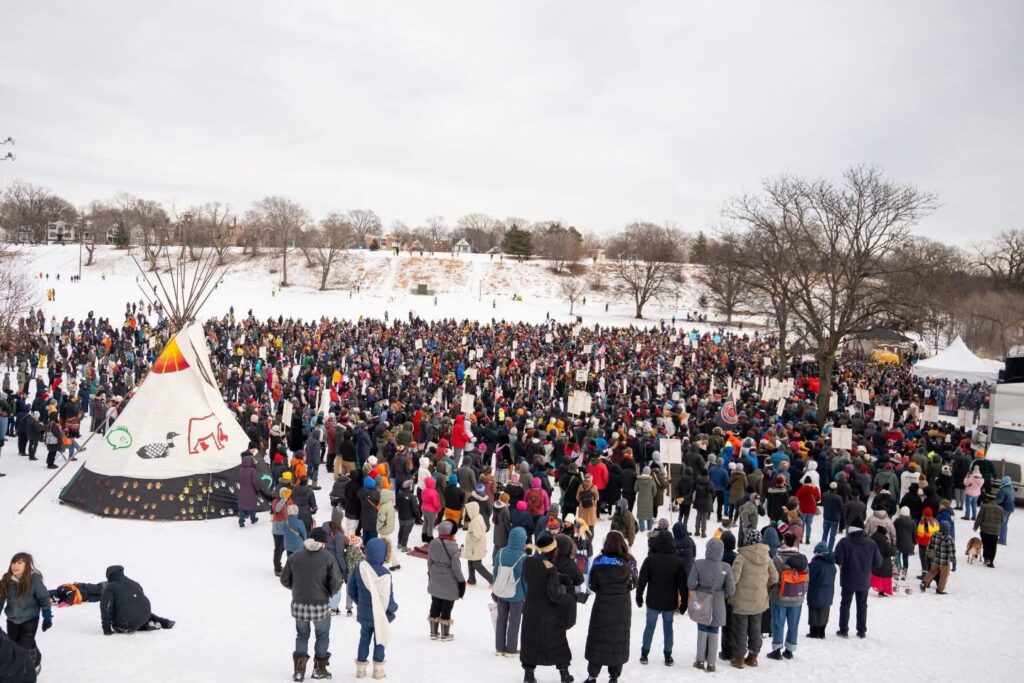
Minnesota is teaching us about courage. Minnesota is showing us what fierce resistance looks like under an occupation by paramilitary forces. A memorial ceremony for Renee Good held in Powderhorn Park on February 7, 2026 offered a space for the people of Minneapolis to grieve. Led by Indigenous leaders and elders, the memorial connected us to generations of resistance. The message was loud and clear – they cannot take our hearts, they cannot take our grief. We are still here. And we are not going anywhere.
RESISTANCE CONFRONTS POWER DIRECTLY
The Trump regime unleashed 3,000 violent ICE agents on a city full of immigrants, hoping that when we witnessed them abducting people, circling schools, breaking windows, and inflicting pain, we would fear them and submit to their control.
But Minneapolis has not backed down one inch.
This regime is targeting the infrastructure of survival, from food stamps to health care to gender affirming care to education, hoping that we will retreat, isolate, endure the siege, and forget about our neighbors.
But in response, Minneapolis has built community-centered systems of care, dispatches to protect, and spaces to heal.
This regime refuses to investigate the murder of Renee Good – and in fact the Department of Homeland Security is pushing to charge her widow with domestic terrorism. They’re villainizing a woman who saw her partner killed by the state right beside her, a woman who is deeply grieving, as a distraction from their bloodshed. Fascism thrives on forgetting, and so we refuse to let them erase our histories, our people, and what is happening right in front of our faces.
Minneapolis remembers. Minneapolis grieves. Minneapolis shows us all how to continue.
RESISTANCE INCLUDES GRIEVING TOGETHER
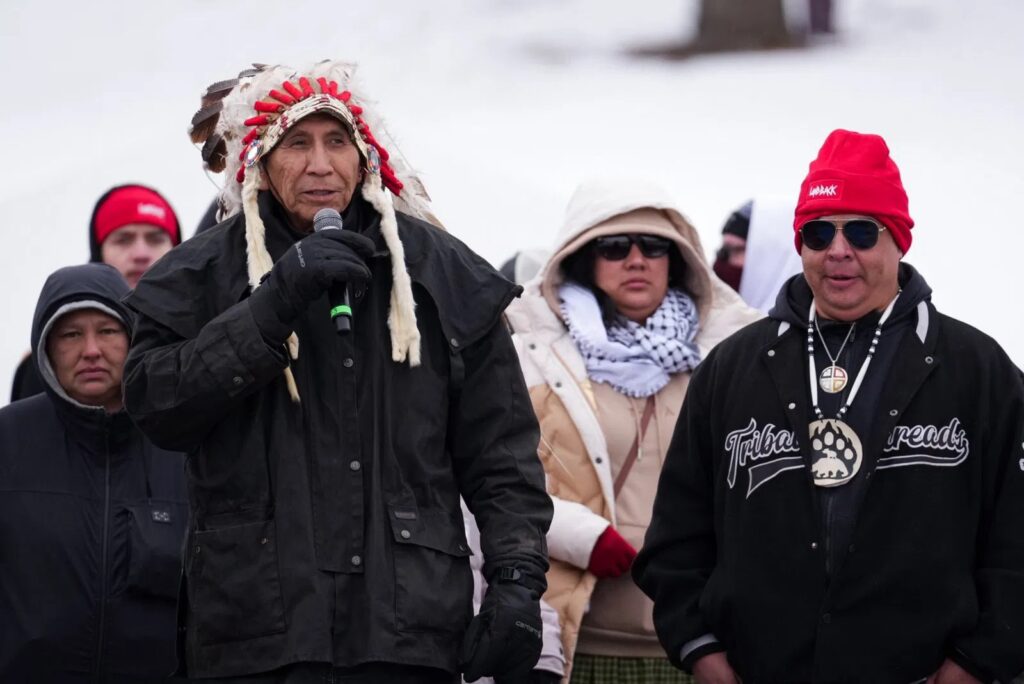
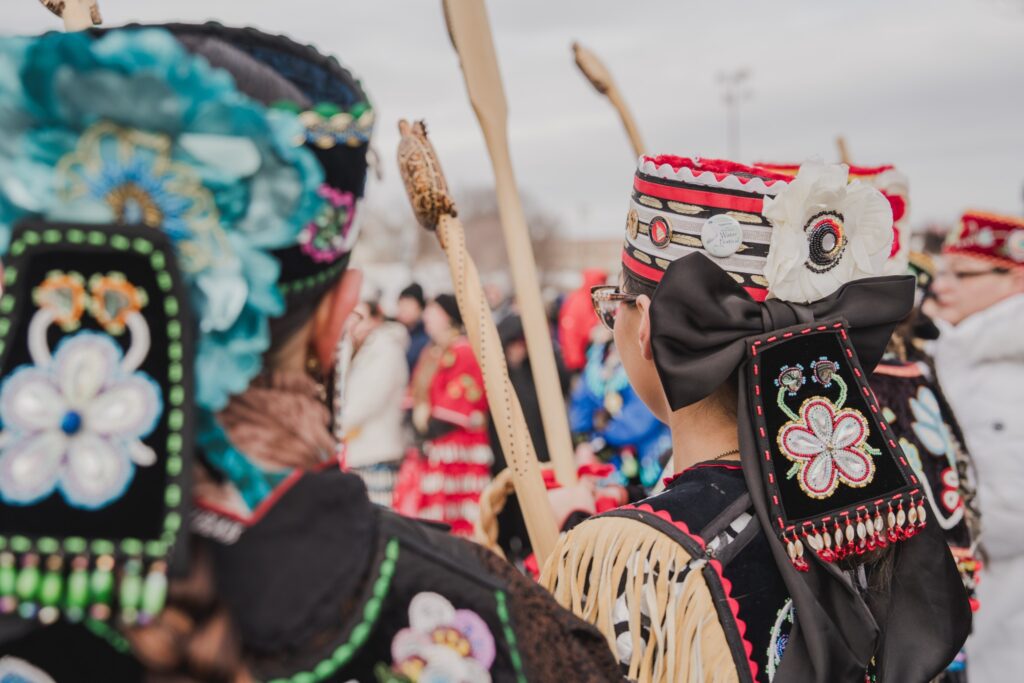
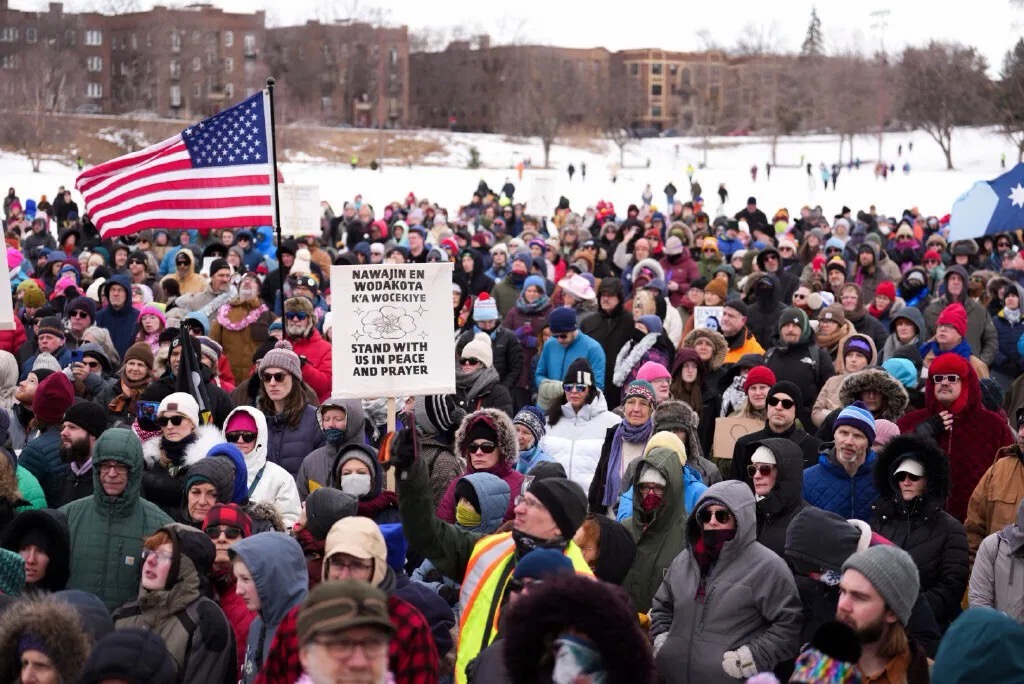
With a blessing from the Good family, the vision of a memorial grew into an expansive public ceremony anchored by Indigenous leadership to mourn and to celebrate Renee’s delight in love and her belief in the human spirit. The memorial honored all those who have been killed by this regime, and over 5,000 participants bore witness to the names alongside Renee’s: at least 30 people killed by ICE in 2025 and at least 8 people killed in 2026 including: Alex Pretti, Keith Porter, Luis Caceres, Geraldo Campos, Victor Diaz, Parody La, Luis Yanez Cruz, and Heber Sanchez Dominguez.
The memorial offered an important lesson as we build the infrastructure of resistance: our grief belongs in public. Systems of violence rely on isolation, silence, and speed. Public grief gathers us together, slows us down, and insists that our humanity matters. When we grieve together, we turn mourning into witness—and witness into protection.
Pain needs space. We cannot merely act while holding our breath through this authoritarian escalation. We have to rest and exhale, feel the pain moving through our bodies. These are lessons that the life-sucking forces of capitalism and colonialism cannot teach.
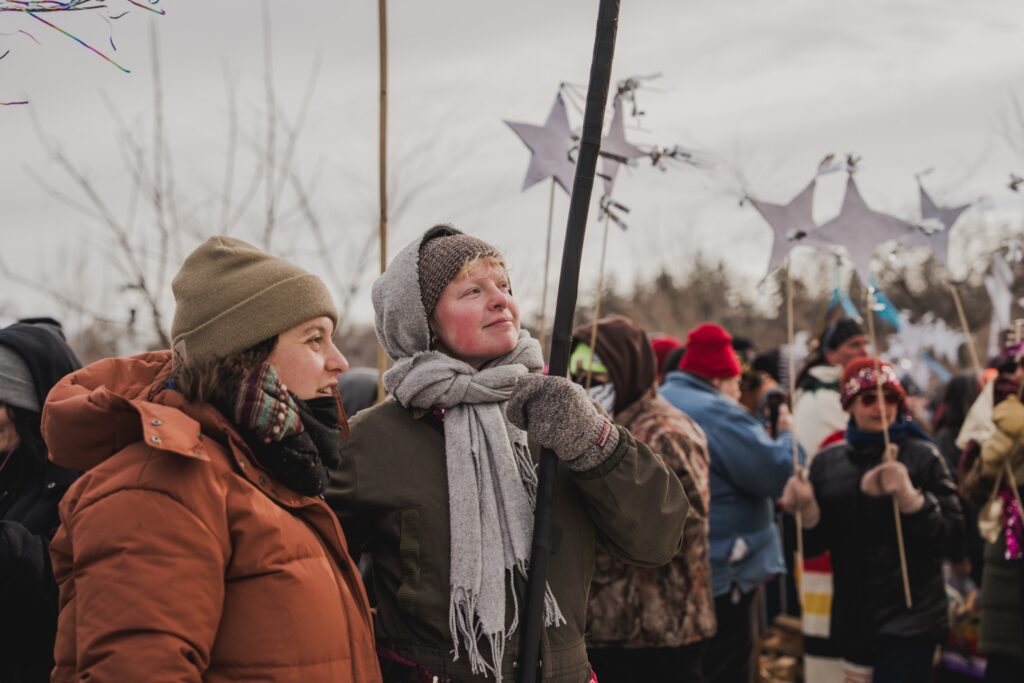
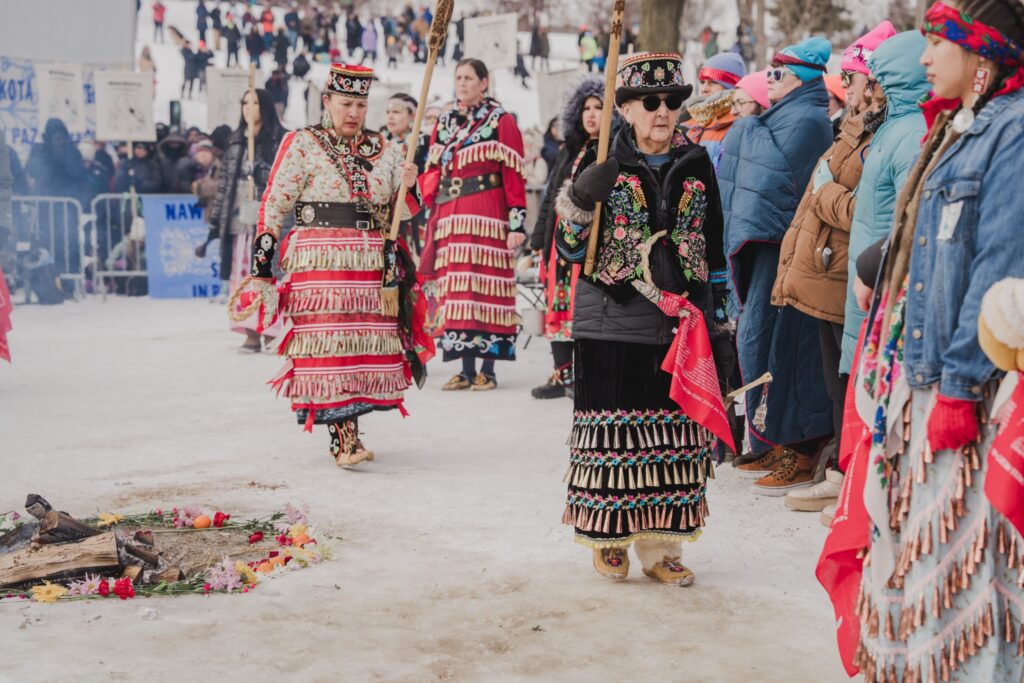
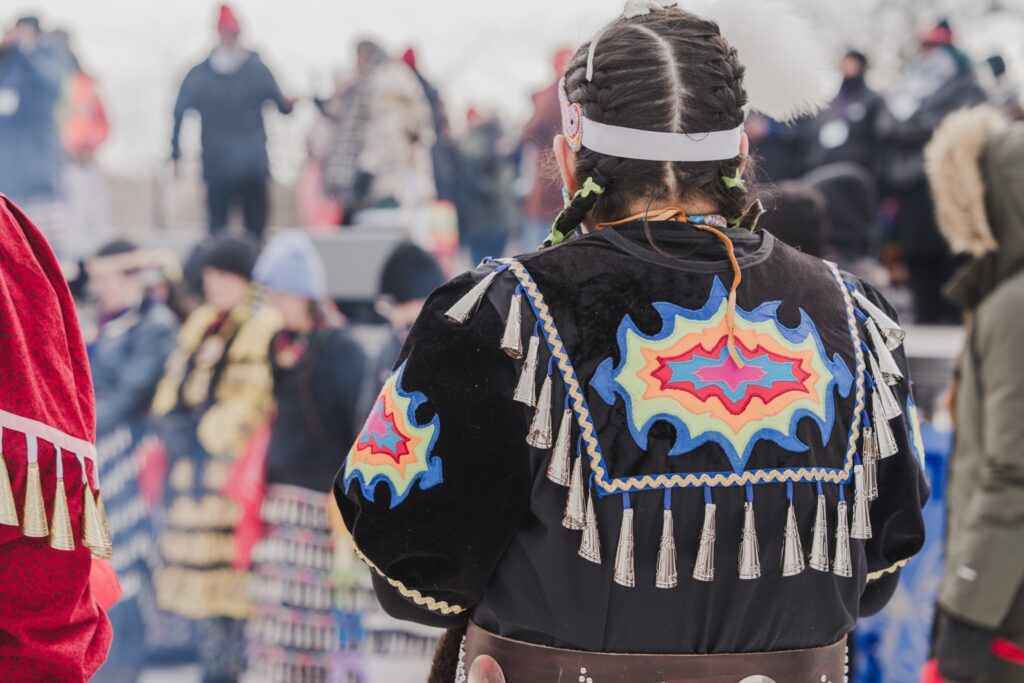
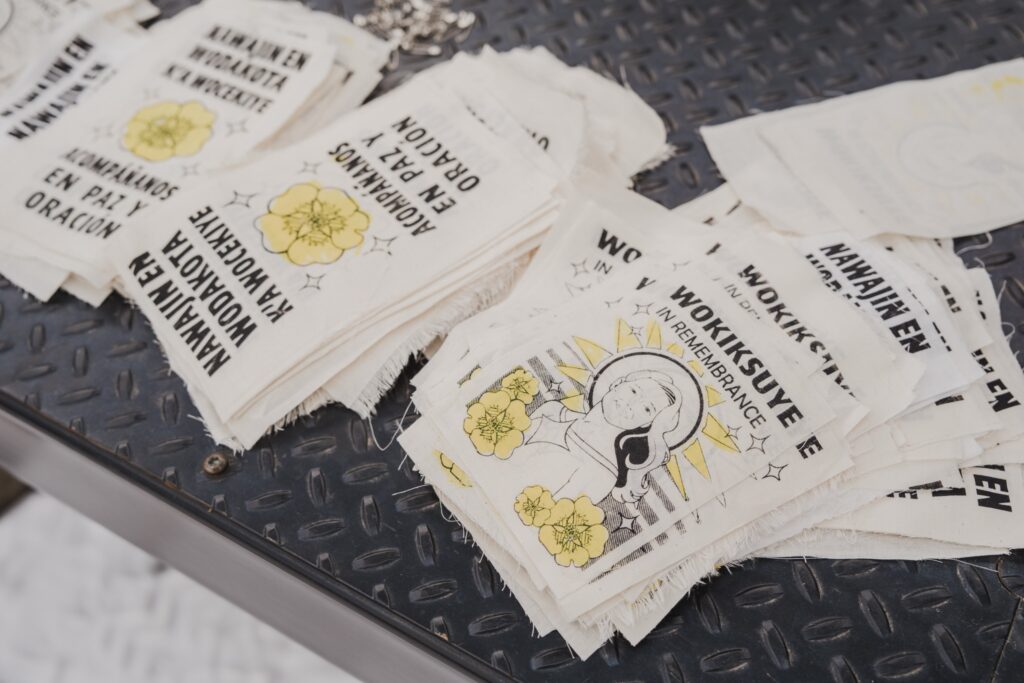
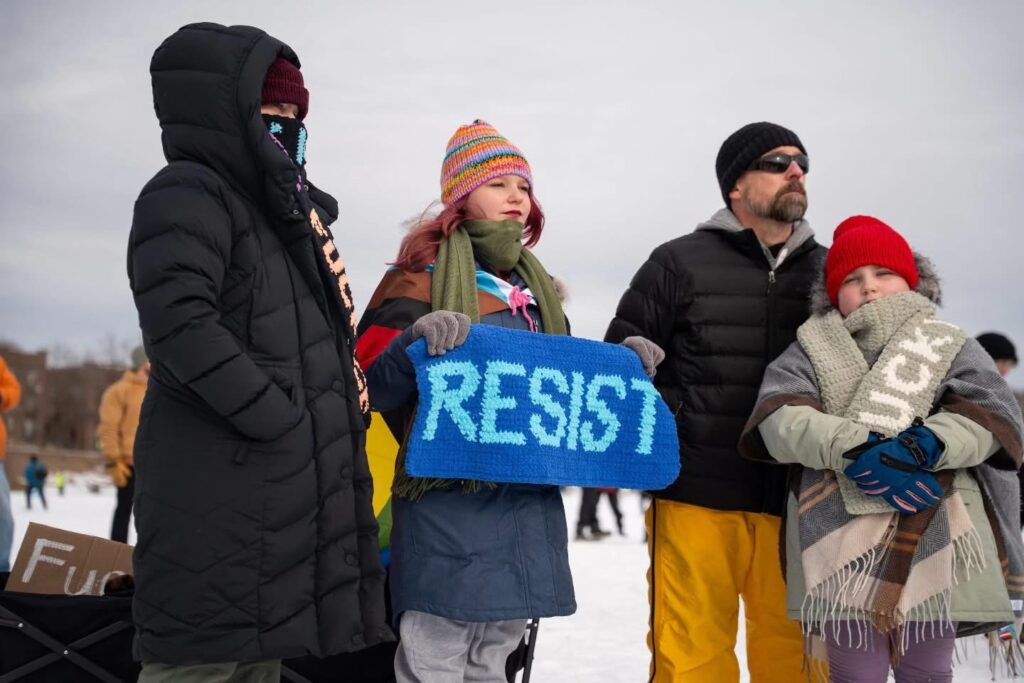
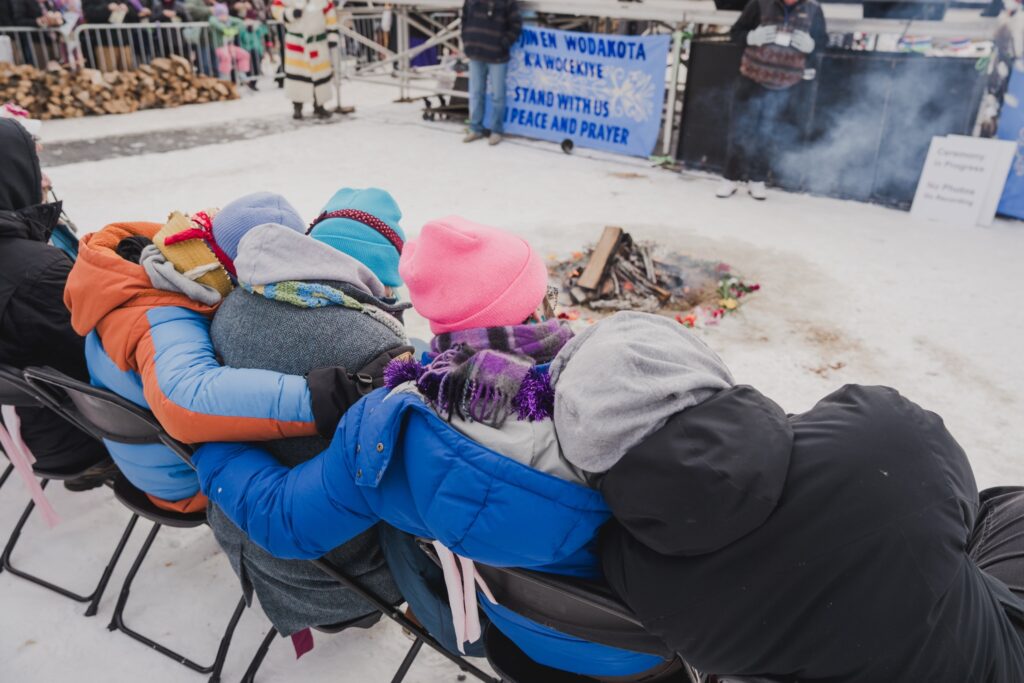
NDN Collective held the first half of the ceremony with Chief Arvol Looking Horse, the 19th keeper of the Sacred White Buffalo Calf Pipe and Bundle. The ground vibrated. Dozens of Indigenous jingle dress dancers moved to songs rooted in a long tradition of prayers for healing; the drums echoing the heartbeat of Mother Earth and all of us. Scattered around the dense crowd, bundled in the cold, over 80 Grief Tenders, marked by hearts pinned on their sleeves, offered respite and witness. People fell into their arms in tears while others talked or shared silence together. More than one person told a grief tender that Saturday was their first time sobbing in public.
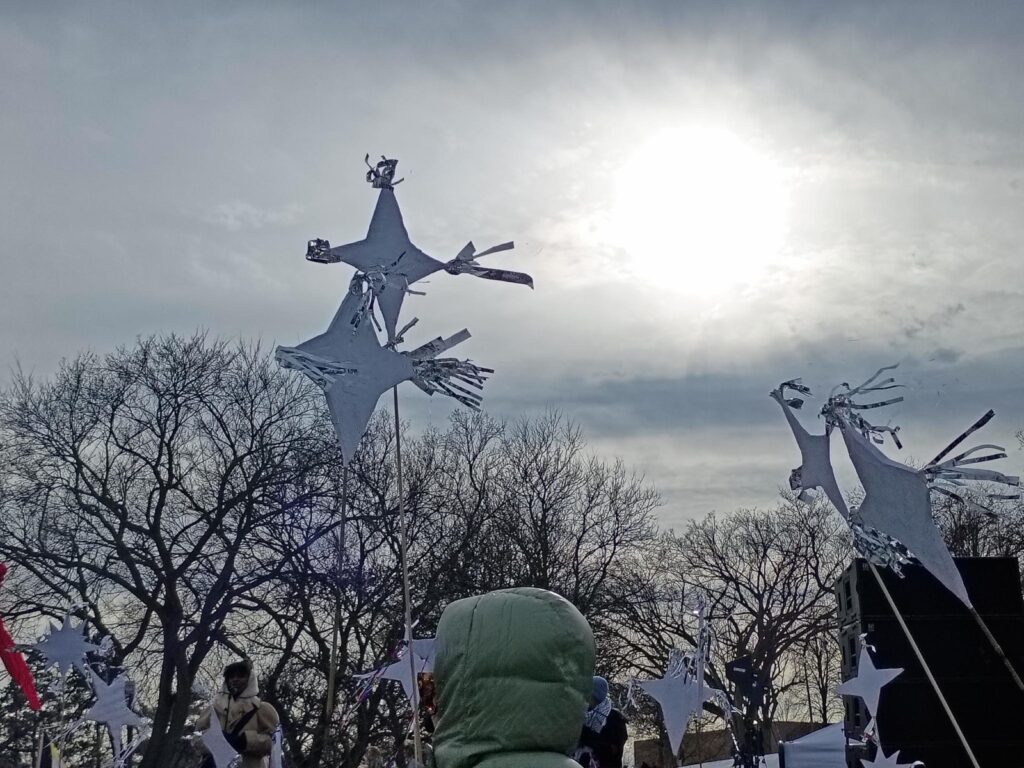
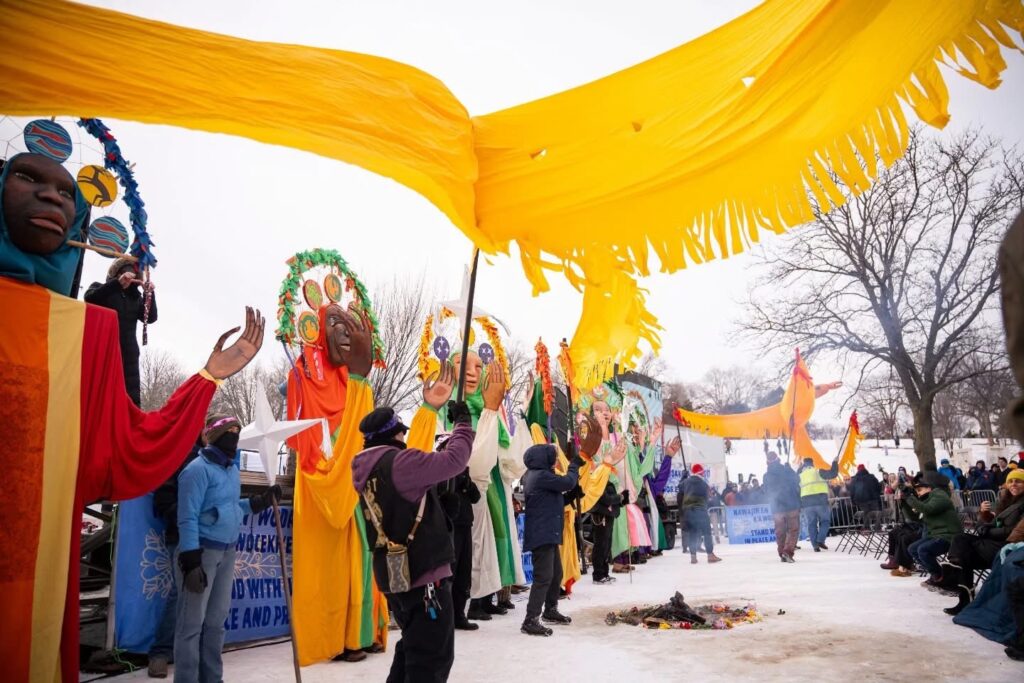
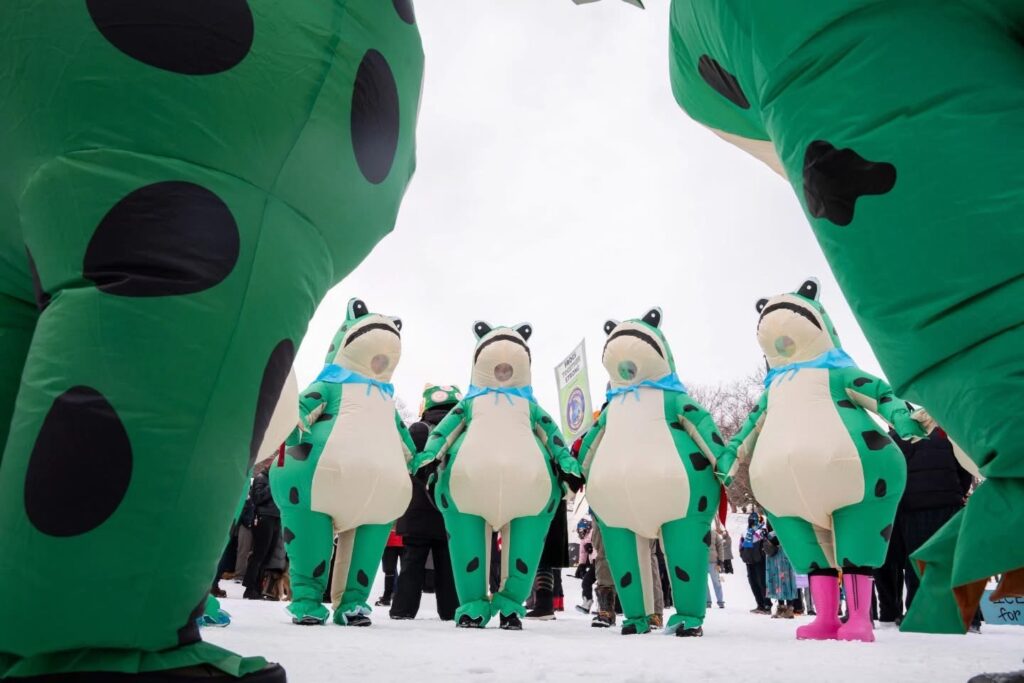
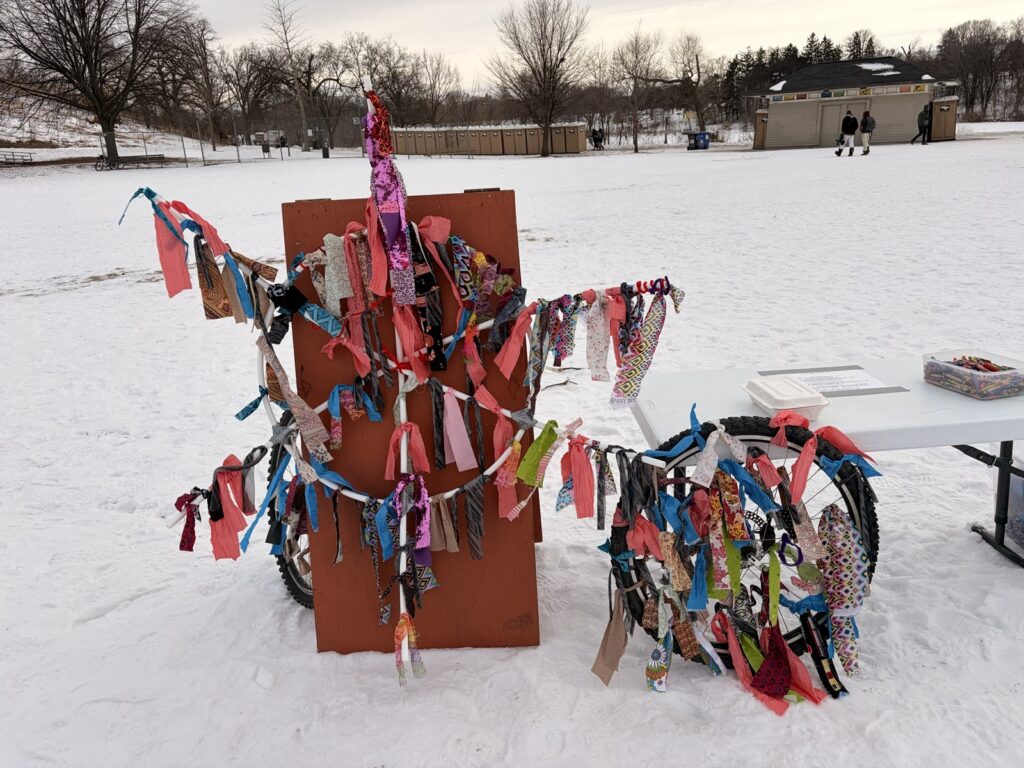
Giant star puppets graced the field of Powderhorn Park, billowing birds moved among 200 stars in the crowd, echoes of the beloved annual Mayday parade but this time on a frozen lake and a park full of snow. Gifts of sequined arm and head bands circulated through the crowd and glistened off winter hats— an homage to Renee’s sparkle.
Grief does not need to be somber. It can move through us in tears, laughter, and breath. After the ceremony closed with poetry and calls to continue caring for each other, hundreds of people stayed and danced. Music and song moved throughout the memorial and connected us to our voices and our bodies. Saturday’s memorial reminded us that grief connects us to our pasts and allows us to invest in hope for the future.
GRIEF OFFERS CARE PRACTICES FOR A BETTER WORLD
This memorial was an offering. One that reverberates across the world, as every community faces devastating loss. The Public Grief toolkit is an offering to lead your own ceremony, to name those killed by ICE and other agents of state violence — when we lift up those we lost in our community we do so, not as an exception but as an example, a practice of focus, of how to hold each life precious and present in every community everywhere.
What happens when people all across the world create better systems of community care and protection? What happens when we learn the lessons of resistance and prepare our communities to fight, to build, to grieve, and to heal?
The old system becomes obsolete, when we show each other that we don’t need it.
We are building the world of the future. Let’s get to it.
“Speaking as a Dakota grandmother, we recognize that Indigenous peoples are the first survivors of state violence. We carry a generational burden. There is an opportunity to come together in this moment. We can turn the tide.” – Gaby Strong, NDN Collective
NDN Collective is an Indigenous-led organization dedicated to building Indigenous power. Through organizing, activism, philanthropy, grantmaking, capacity-building, and narrative change, we are creating sustainable solutions on Indigenous terms.