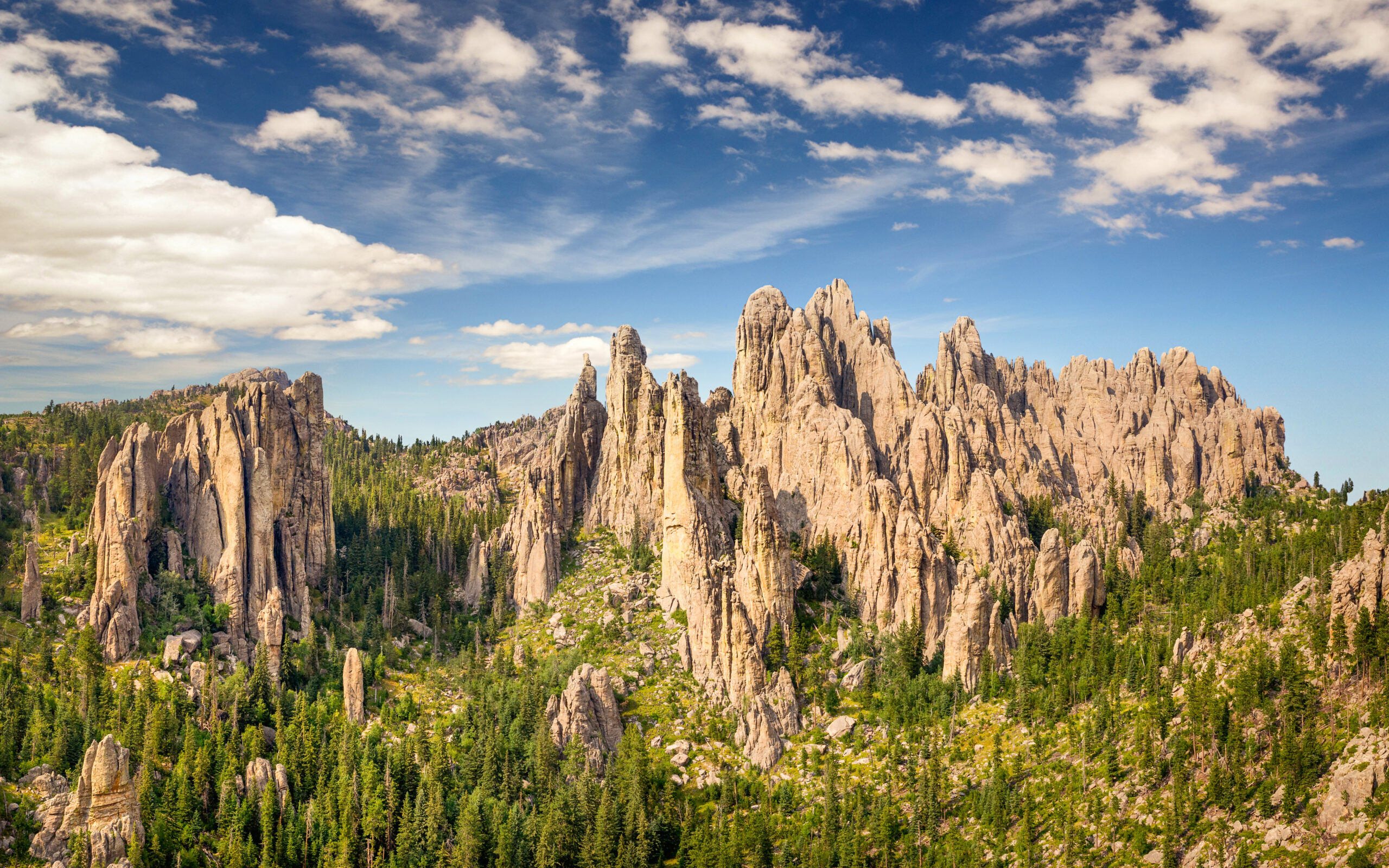

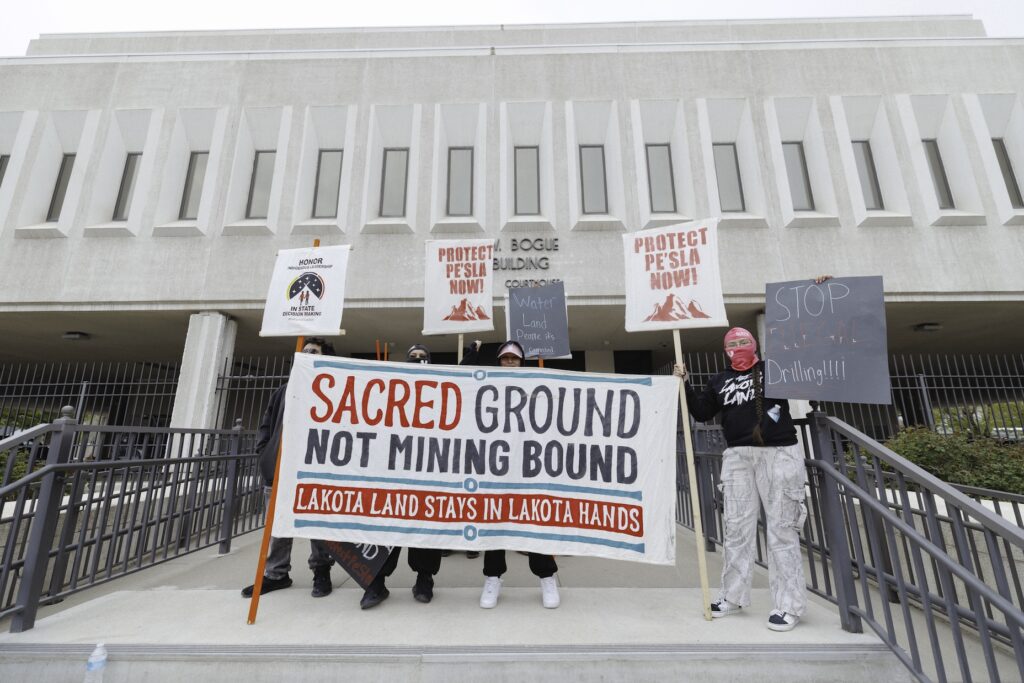
As Indigenous peoples, we are accustomed to generational battles. The fight to both return and protect the Ȟe Sápa (Black Hills) in South Dakota is one of those fights. Our sacred sites and waters are constantly facing threats from new mining efforts.
The Dewey-Burdock Uranium Project is a proposed mine covering approximately 10,580 acres across private and federal lands within the Ȟe Sápa. Individuals, organizations, and communities have been fighting against this uranium project for 20 years due to the radioactive waste it would generate, posing major threats to the health of people, animals, land, and water in the area.
History of Uranium Mining and Native Communities
Native communities in South Dakota are no strangers to the risks posed by uranium mines. In 1962, about 200 tons of radioactive material from old uranium mines seeped through a broken dam at the Angostura Reservoir and made its way into the Cheyenne River, upstream from Pine Ridge. This meant that many living on the Pine Ridge Reservation were exposed to radioactive water. Exposure to radioactive materials is linked to cancer, cardiovascular disease, neurological disorders, autoimmune disorders, thyroid disease, and more. We know that even 50 years later, high uranium levels are still present in Angostura Reservoir in the southern Ȟe Sápa.
The Angostura Reservoir is not far from where the proposed Dewey-Burdock Uranium project is located. So it makes sense that the surrounding community opposes a project that risks leaking even more radioactive material into the local ecosystem and waters. It is important to note that the threat from radioactive waste does not lessen over human time scales. Waste from uranium mining remains radioactive at harmful levels for hundreds of thousands of years.
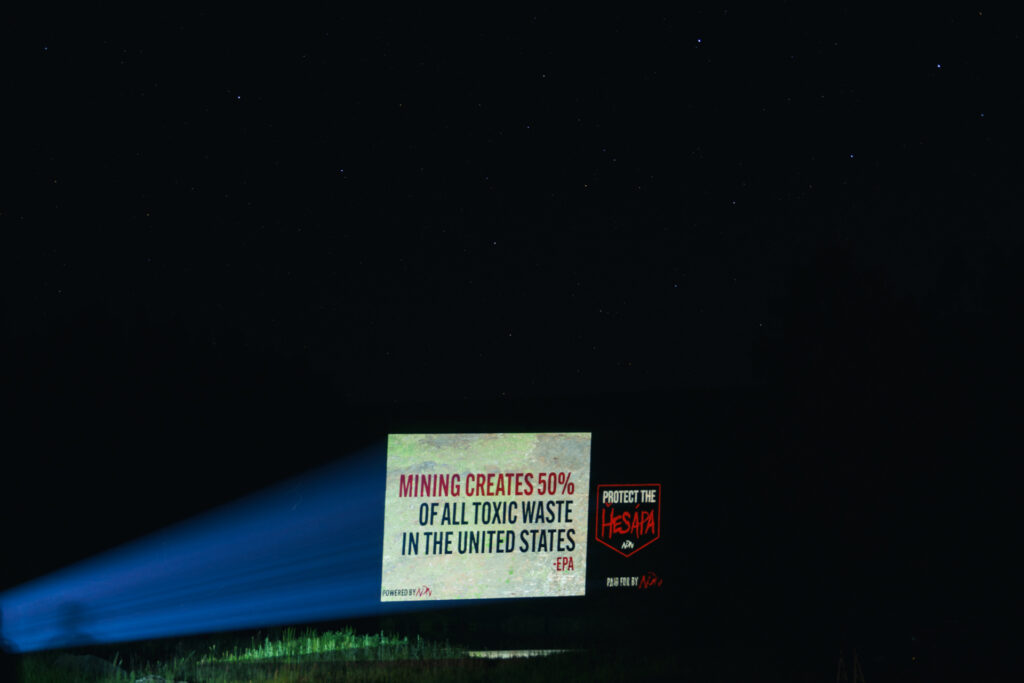
We have seen the impact on Native communities when radioactive waste from uranium mining and processing is left behind. Today, over 500 abandoned uranium mines are scattered across the Navajo Nation, causing numerous health disparities. We also see how what was once a historical gathering place for Yakama peoples on the shore of the Columbia River is now a Superfund site so contaminated that spending a few minutes in the soil underneath some of the buildings would expose someone to enough radiation to kill an adult.
Companies always promise they will adequately monitor and properly dispose of waste. But history tells us otherwise.
Threat from the Dewey-Burdock Uranium Project
The Dewey-Burdock project would mine using the in situ leach process, which works by pumping liquid chemicals into the earth to dissolve the uranium underground, and then pumps the uranium-filled fluid back to the Earth’s surface. This method of mining poses major threats to groundwater, sacred sites, wildlife, and the long-term health of ecosystems in the area. It also uses a large amount of one of our most precious resources: freshwater. The original water applications for the proposed Dewey-Burdock project asked for water rights to over 9,000 gallons of water per minute – which is the equivalent of the average monthly water usage for a family of four in the United States.
There are those of us who have come from our families and from our ancestors and then our elders who taught us resistance. And we didn’t really have the word resistance. It always came under treaty. When you start talking treaty right off, you know you’re talking resistance – it’s that part of who we are today.
– Madonna Thunder Hawk
The site of the proposed project is located entirely on territory delineated in the 1868 Treaty of Ft. Laramie, which was an agreement signed and entered into by both the Oceti Sakowin and the United States government. Despite this agreement, the U.S. government violated the agreement by illegally seizing the sacred Black Hills in 1877 after gold was discovered in the area.
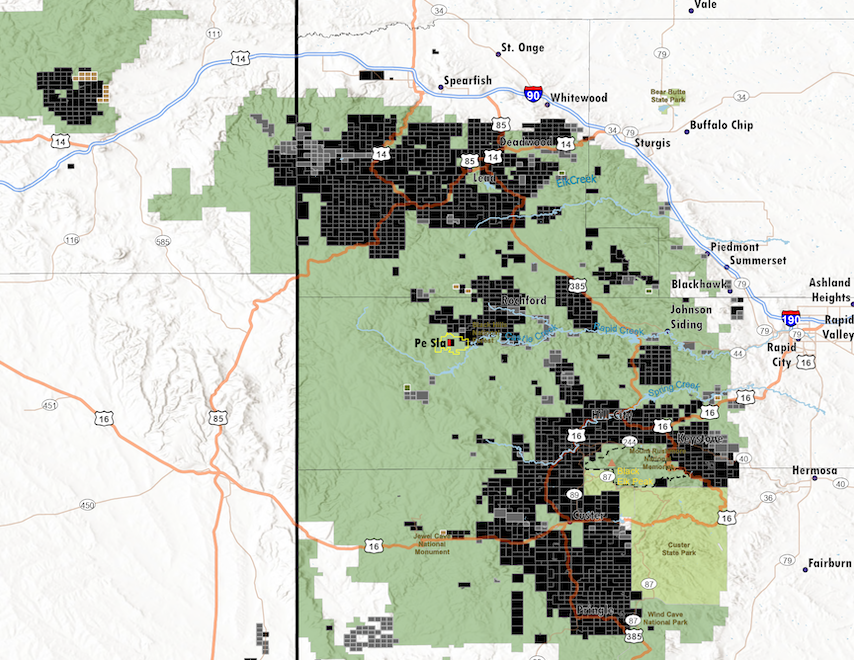
On this week’s episode of the LANDBACK: For the People podcast, matriarch Madonna Thunder Hawk and Lilias Jarding of the Black Hills Clean Water Alliance discussed how today, the land faces similar threats. Right now, there are about 259,014 acres in the Black Hills area under active mining claim – or about 17 percent of the entire Black Hills. They talked about how for nearly 20 years, tribes, community members, and local organizations have worked to protect the Ȟe Sápa from the Dewey-Burdock project, and how important it is to continue to do so.
enCore Energy, the company behind the Dewey-Burdock project, announced in June that the Bureau of Land Management issued a final decision and approved the project, authorizing the company to begin construction. However, the project still has many permits pending – so starting construction would violate laws and local regulations.
Part of the reason that we need to be organized is because the people who want to come in and mine are organized. And they have a lot more money than all of our organizations put together. The current situation is that this administration in Washington has put out all sorts of statements and policies that directly attack the Black Hills and other places…And so this is a time when if somebody’s going to do something, this is the time that they need to do it.
-Lilias Jarding
We know that this has not stopped energy companies in the past – in fact, the Dakota Access Pipeline (DAPL) operated illegally for nearly a decade. Mining corporations do not care about following the rules, or about environmental harms, or about the wellbeing of people in the area. Their strategy has always been to work as quickly as possible to extract as much as possible before disappearing to the next project. That’s why we must be as vocal as possible in our opposition to Dewey-Burdock in the coming weeks.
The risks at Dewey-Burdock are immense. It could cause severe groundwater contamination, as it intentionally injects acidic or alkaline chemical solutions (essentially battery acid) into aquifers to dissolve uranium. It would use an enormous amount of fresh water, which would be pulled from aquifers in the Black Hills.
No in-situ leach uranium mine has successfully restored a mined aquifer to its pre-mining condition, with contamination remaining for decades after mines close despite cleanup efforts. The processes leave behind radioactive waste, which can remain radioactive for hundreds of thousands of years. This means permanent degradation and irreversible harm to the environment, aquifers, groundwater, and wildlife.
The Solution is LANDBACK
That’s why, in addition to organizing to stop individual mining and drilling projects from happening, NDN Collective and our allies continue to push for two key legislative moves. The first is a Black Hills-wide administrative mineral withdrawal for a maximum of 20 years. This would mean no mining or drilling would be allowed in the Black Hills for two decades.
The second is the full return of the Black Hills to its rightful stewards. We made some headway with this in June, when all nine South Dakota tribes passed resolutions supporting the development of legislation to return federal lands in the Sacred Ȟe Sápa.
There are some actions we can all take right now to help. The first is to look out for new water and mining permit approvals in South Dakota – because once those are published, the public only has ten days to respond. Another is to text HESAPA to 50302 to stay up-to-date on the current fights to protect the Ȟe Sápa.
The land protection victory at Pe’ Sla affirmed that when tribes and community members come together with a multi-pronged fight, we can win.