ORGANIZING · HE SAPA LANDBACK
Sacred He Sapa
Restoration Act
The Sacred He Sapa Restoration Act (SHSRA) is federal legislation that returns federal public lands in He Sapa (the Black Hills) to the Oceti Sakowin (Great Sioux Nation)
Facts about this legislation:
- It will return federal public lands only
- Does not include private property
- Requires a comprehensive land management plan
- Protects clean water, forests, wildlife, and cultural sites
- Protects sacred landscapes
This act does not affect private lands, nor does it involve any acceptance of money for the Black Hills. The United States Constitution, under Article VI, asserts that treaties are “the supreme law of the land.” The 1868 Treaty is such a treaty, and its terms must be honored and upheld.
When these federal public lands are given back to the Oceti Sakowin, the 1872 Mining Act that allows for mining claims on federal public lands will no longer have jurisdiction and will halt mining claims on these federal public lands in He Sapa. This is both a strategy to address a long-term issue of justice and human rights in the stealing of He Sapa, as well as a strategy to fight environmental racism and the destruction of the environment and the polluting of the watersheds within He Sapa.
— Richard Moves Camp
Tribes Uniting for He Sapa Federal Land Return & Protection
These tribal governments have passed resolutions of support for the return of the federal public lands in He Sapa to the Oceti Sakowin as of July 2026:
- Standing Rock Sioux Tribe – June 5, 2024
- Rosebud Sioux Tribe – October 23, 2024
- Yankton Sioux Tribe – September 2, 2025
- Crow Creek Sioux Tribe – October 6, 2025
- Lower Brule Sioux Tribe – November 5, 2025
- Oglala Sioux Tribe – October 29, 2025
- Sisseton Wahpeton Oyate – January 7, 2026
- Flandreau Santee Sioux Tribe – March 3, 2026
- Cheyenne River Sioux Tribe – June 2, 2026
NDN Collective’s role in this work has been to support the Oceti Sakowin Tribes, Traditional Leaders, and Treaty Councils in the protection of He Sapa by developing federal legislation called the “Sacred He Sapa Restoration Act.”
Take Action
Sign the Sacred He Sapa Restoration Act Oyate Sign On Letter.
TEXT HESAPA TO 50302
Sign up for our email list to stay up to date on this work.
Educate yourself on the He Sapa issue so you can educate others. This includes watching the documentary film Lakota Nation vs. United States or listening to the LANDBACK For the People Podcast:
- He Sapa Landback Episode with Richard Moves Camp & Robert Two Crow
- A Matriarch of the Movement Episode with Madonna Thunder Hawk
When you travel to the sacred sites in the He Sapa, take offerings and pray for their protection and return.
A Brief History of He Sapa
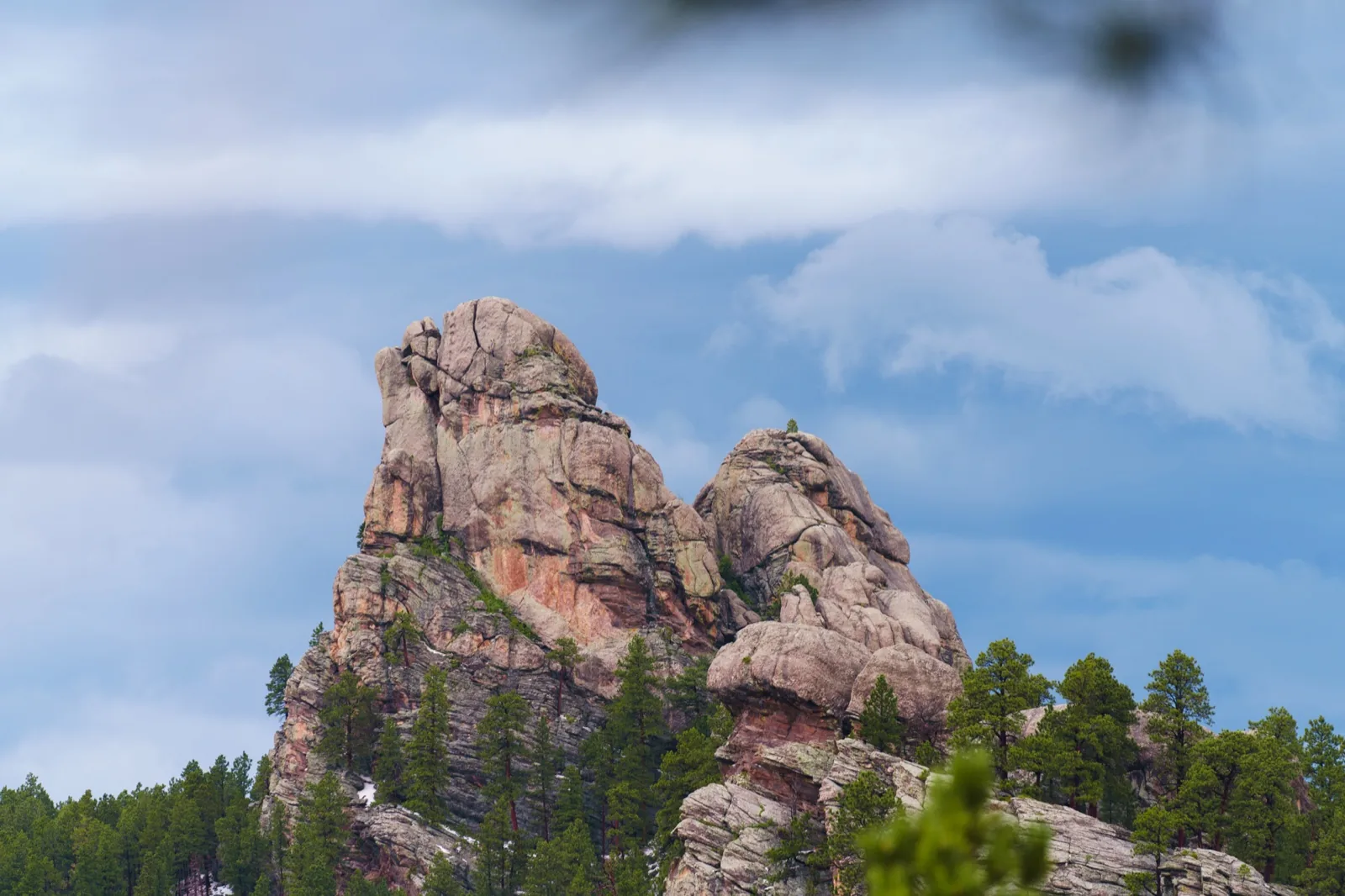
The He Sapa is The Heart of Everything That Is (Wamakha Ognaka Ichante). The He Sapa (Black Hills) are the sacred center of the Oceti Sakowin Oyate’s (Great Sioux Nation) original homelands, spiritual birthplace, and the heart of who we are as a Nation. The He Sapa holds and protects Lakota lifeways, identity, spirituality, emergence stories, and cultural practices. We have the inherent right to maintain our spiritual and cultural relationship with this land, as we have since time immemorial.
The U.S. took the He Sapa illegally. In 1868, the Fort Laramie Treaty recognized the He Sapa as part of the “unceded Indian territory” belonging to the Oceti Sakowin. But in 1877, the U.S. Government illegally seized the He Sapa in violation of the treaty after gold was discovered. The Supreme Court admitted the land was stolen. In United States v. Sioux Nation of Indians (1980), the U.S. Supreme Court ruled that the Black Hills were taken illegally and offered financial compensation. The Oyate (~”Sioux Nation of Indians”) refused the money. That money still sits in a trust, untouched for over 45 years because the Black Hills are not for sale. The Oyate have made it clear we don't want a payout – we want the Black Hills back.
United States v. Sioux Nation of Indians 1980, 448 US 371, the United States Supreme Court affirmed the finding of the Court of Claims that the United States had effected an unlawful taking of the Black Hills in 1877, citing the Court of Claims’ conclusion that: “[a] more ripe and rank case of dishonorable dealing will never, in all probability, be found in our history”
Contact Us
Anissa Martin
Lead Organizer, He Sapa LANDBACK Campaign
[email protected]
Dr. Valeriah Big Eagle
Director of He Sapa Initiatives
[email protected]